

The latest news stories and stories of interest in the Willamette Valley from the digital home of Southern Oregon, from Wynne Broadcasting’s WillametteValleyMagazine.com
Friday, July 31, 2026
Willamette Valley Weather


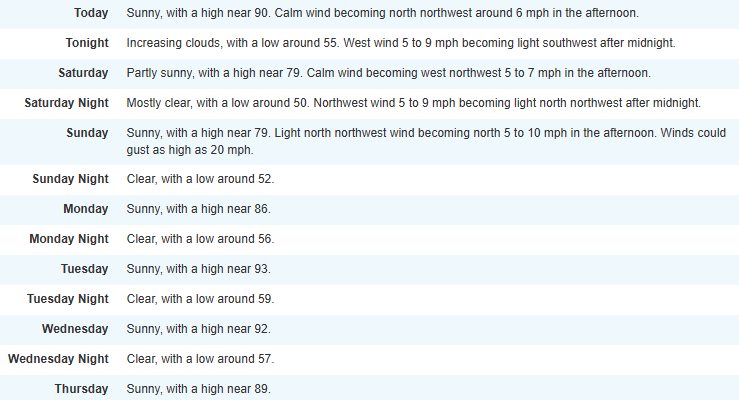
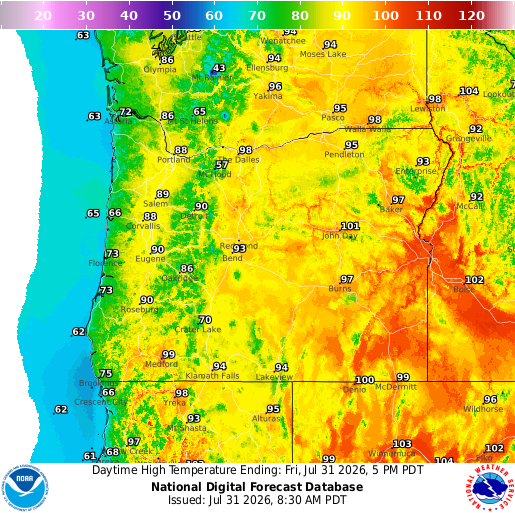

Be sure to check out what we’re predicting in your area: https://www.farmersalmanac.com/extended-forecast
U.S. Forest Service – Willamette National Forest – HIGH Fire Danger
The Forest remains in Industrial Forest Precaution Level (IFPL) 1 and Stage 1 Fire Restrictions. All campfires, charcoal or briquette fires, pellet fires, and any other open fires are prohibited outside of Forest-constructed fire rings within designated campgrounds. Portable cooking stoves, portable gas campfires, and lanterns using pressurized fuel or propane with an on/off switch are allowed. Additional information is available on the Willamette National Forest website at https://www.fs.usda.gov/r06/willamette/fire – To report a wildfire, call 911.
Please pay close attention to the conditions across the state. The National Weather Service has issued Red Flag Warnings and Fire Weather Watches for a large portion of the Oregon
The forecast is calling for another round of lightning. It’s already extremely dry. Our ask: prevent sparking a wildfire. Check your tow chains. Don’t mow tall dry grass in the heat of the day Don’t park on tall dry grass
We’ve got prevention tips posted to our website to share with your friends and family. LEARN MORE: https://www.oregon.gov/…/pages/prevent-wildfires.aspx

Willamalane’s Concerts in the Park Series at Island Park
Featuring live performances from local bands on Thursday and Friday evenings from July 30 through Aug. 14.
The concert series is better than ever this year, featuring favorite local bands, art vendors, and food trucks on Thursday and Friday nights at Island Park.

Concerts in the Park: Skeletons from the Closet
6:00 PM – 8:30 PM on July 31, 2026 — $5 or free with two food donations
Enjoy live music under the trees at Island Park with a variety of genres and a new band each night. On July 31, catch Skeletons from the Closet, a Grateful Dead tribute band playing familiar hits and crowd favorites. Bring along blankets or chairs to enjoy the music. You can purchase beer, wine, and concessions, or bring your own picnic dinner, fillable water bottle, and sealed non-alcoholic beverages.
- Friday, July 31 at Island Park
- Gates and concessions open at 5:30 p.m., and the concert begins at 6 p.m. The show includes two sets of live music with a 20-minute intermission.
- Admission is $5 per night or free when you bring two non-perishable food cans to donate. Donations support the food pantry at Willamalane Adult Activity Center.
For more information about Concerts in the Park, including the full concert lineup, event rules, and more, click here.
Concerts are free with a food donation July 30 – August 14.
Admission is $5, or free when you bring two non-perishable food items to donate. Learn more, like what you can and can’t bring, how to use the shuttle, and see the whole concert lineup at willamalane.org/concerts
Get Ready for the 5th Annual Michael Bryson Foundation 5k Shuffle
The 5K will be held at Alton Baker Park on Aug 8, 2026 —- This 5K is not only a time to remember Michael, but also a way to help create awareness about mental health, addiction, and missing persons. The proceeds from this go to a scholarship in Michael’s name, helping families with missing loved ones, and search efforts.
This is the 5th annual 5K, and it will take place around the time Michael went missing, it will be 5 years on the 5th.
 Michael Bryson 5 K Shuffle will be 8-8-26 At Alton Baker Park in Eugene Oregon at 9 am

This will be the 5 th annual 5 K shuffle please come and show your support and love for Michael Bryson and all missing people! You can walk-Run-Shuffle! https://michaelbrysonfoundation.com/5k-shuffle-2026 Follow on Facebook: https://www.facebook.com/groups/1180812175619844
Lane County Sheriff’s Deputy Charged with Child Exploitation Offenses
A Lane County Sheriff’s Deputy was arrested and charged by criminal complaint with actual and attempted sexual exploitation of a minor, enticement of a minor, and receipt of child sexual abuse material.
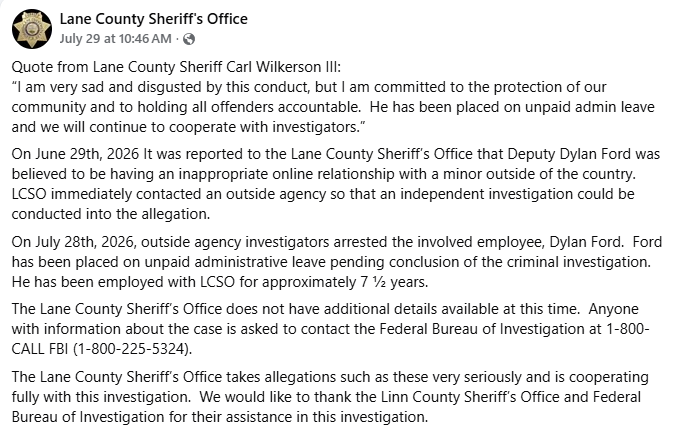
Dylan Ford, 29, made his first appearance in federal court today before a U.S. Magistrate Judge. He was ordered detained pending further court proceedings.
According to court documents, Ford allegedly exchanged sexually explicit chats, images, and videos with multiple children under the age of 16. He used Telegram, an encrypted chat platform, and disappearing photo apps to begin conversations that would develop into sexual exchanges with the children. As part of their investigation, state and federal investigators obtained a search warrant and searched Ford’s cell phone. Ford’s phone contained numerous conversations with self-described minors in which he enticed the children into sending him custom child sexual abuse material, including instructing specific sexual acts involving the use of household items. Investigators also located a video depicting a distressed, crying minor carrying out various sexual acts. In some of the chats, Ford sent minors a colleague’s social media profile photo in an apparent effort to shield his identity.
The Lane County Sheriff’s Office requested the assistance of the Linn County Sheriff’s Office immediately upon becoming aware of the possibility that Ford was engaging in this activity. The Linn County Sheriff’s Office then contacted the FBI to collaborate on the investigation.
Ford was arrested on July 28, 2026, by the FBI. This case was investigated by the FBI in coordination with the Linn County Sheriff’s Office. It is being prosecuted by Assistant U.S. Attorney Will McLaren.
Anyone who has information about the physical or online exploitation of children is encouraged to call the FBI at 1-800-CALL-FBI (1-800-225-5324) or submit a tip online at tips.fbi.gov.
Federal law defines child pornography as any visual depiction of sexually explicit conduct involving a minor. It is important to remember child sexual abuse material depicts actual crimes being committed against children. Not only do these images and videos document the victims’ exploitation and abuse, but when shared across the internet, re-victimize and re-traumatize the child victims each time their abuse is viewed. To learn more, please visit the National Center for Missing & Exploited Children at www.missingkids.org.
This case was brought in collaboration with Project Safe Childhood, a nationwide initiative to combat the growing epidemic of child sexual exploitation and abuse, launched in May 2006 by the Department of Justice. Led by the U.S. Attorneys’ Offices and the DOJ’s Child Exploitation and Obscenity Section, Project Safe Childhood marshals federal, state, and local resources to locate, apprehend, and prosecute individuals who exploit children, as well as identify and rescue victims. For more information about Project Safe Childhood, please visit www.justice.gov/psc.
Creswell Movies in the Park #2: How to Train Your Dragon (Animated) (PG)August 1st, 2026, at dusk at Harry Holt Memorial Park (127 North 4th Street in Creswell)

Film Summary: In the small Viking village of Berk, where humans and mysterious creatures of lore coexist, Hiccup, a bright-eyed teenager trying to fit in, wants to prove his worth and follow his tribe’s long-standing tradition: become a dragon slayer. However, as scrawny Hiccup captures an elusive Night Fury, the rarest dragon of all, something unprecedented happens. But what if the prejudice-defying secret came to light? Will the Vikings realize dragons aren’t what they have always believed, or brand Hiccup a traitorous, dragon-loving pariah?
Bring your friends, family, and folding chairs! The City of Creswell’s Movies in the Park is back for the Summer 2026 season! Join us at Harry Holt Memorial Park (127 North 4th Street in Creswell) for FREE family-friendly movies under the stars!
Movies will begin at dusk (approximately between 8:30pm and 9:00pm) and vendors will have concessions available for purchase starting at 7:30pm. If you have any questions, please contact Creswell City Hall at 541-895-2531 or at info@creswellor.gov https://www.facebook.com/events/3961342647502392/
Community Health Centers of Lane County Marks National Health Center Week With Public Events
Community Health Centers of Lane County joins the National Association of Community Health Centers and over 1,500 Community Health Centers (CHCs) across the country to celebrate National Health Center Week and recognize the vital role health centers play in providing affordable, effective, comprehensive primary care to more than 52 million Americans, regardless of insurance status or ability to pay.
This year, we celebrate how health centers use innovation to reach more patients and improve outcomes.
For 22 years, Community Health Centers of Lane County has provided quality primary care, dental and behavioral health services to the Eugene Springfield and Cottage Grove community. CHCLC services offer not only treatment and prevention of illness but also services that address the socio-economic needs and well-being of their nearly 30,000 patients. Their community health worker program helps strengthen patients’ abilities to address life challenges through short-term, goal-oriented support; to connect patients to community resources, help them navigate systems, and overcome barriers to access services.
“It’s easy to mistake our CHCLC as typical medical clinics,” said CHCLC CEO, Eve Gray, “but with the multitude of services they provide, for many people in Lane County with the most needs they truly are the connection to a better life.”
Health centers don’t just expand access. They improve outcomes and save money. For just 1% of national health care spending, CHCs deliver primary care to 14% of the U.S. population and save the health care system billions of dollars each year by preventing costly hospital visits. Community Health Centers of Lane County is proud to be part of this critical mission.
This year, the CHCLC was selected as a recipient of a Catalyst Grant through the Oregon Rural Transformation Program. This investment will allow the South Lane Community Health Center to expand integrated oral health services through our Expanded Practice Dental Hygienist (EPDH) program while laying the groundwork for the launch of full comprehensive dental services in 2027. Grant funding will support the recruitment of key staff, the purchase of essential equipment and supplies, and facility and team readiness to ensure a successful launch. Once open, the dental clinic will provide coordinated, patient-centered care—from preventive services and treatment planning to follow-up care—working alongside primary care to improve whole-person health. This grant brings to life a vision nearly two decades in the making, with significant effort from community partners, Community Health Council members, donors, and advocates whose dedication and collaboration made this milestone possible.
To learn more about Community Health Centers of Lane County, come visit us at one of the following events at the Delta Oaks Clinic, 1022 Green Acres Road, Eugene OR 97408:
• Tuesday August 4, 2026. Wildfire Smoke Preparedness Presentation. 10:00-11:00AM
• Wednesday August 5, 2026. Know Your Numbers: Free Blood Pressure & A1C Tests. 9:00AM- 4:00PM
### ABOUT COMMUNITY HEALTH CENTERS OF LANE COUNTY – The mission of Community Health Centers of Lane County is to improve the health and wellness of our community through access to affordable, holistic healthcare. We believe healthy people are the foundation of healthy communities. Each of our clinics provides superior, affordable primary care for the whole family. We offer compassionate care for infants, children, adolescents, adults and seniors. We focus on integrated care that values the whole person. Our services encompass not only treatment and prevention of illness but also health education, behavioral health services, children’s preventative dental service and outreach. From treatment of chronic conditions, such as diabetes, high blood pressure and asthma to mental health consultations and referrals to specialists, the clinic providers work side-by-side to help meet your healthcare needs.
No matter your age, family situation or ability to pay – Community Health Centers is your partner in affordable healthcare. Community Health Centers of Lane County is a division of Health and Human Services of Lane County.
ABOUT NATIONAL HEALTH CENTER WEEK – Every August, the Association of Community Health Centers (NACHC) sponsors National Health Center Week (NHCW) to celebrate and increase awareness of America’s Community Health Centers (CHCs). NHCW is an opportunity to highlight the commitment and passion of CHC patients, staff, board members, and supporters who make it possible to provide quality, comprehensive healthcare services 52 million patients across more than 17,000 communities. Learn more at http://www.healthcenterweek.org/.
Community Health Centers of Lane County ·
 Wildfire smoke season is here. Are you prepared?Join us during National Health Center Week for a FREE community class on Wildfire Smoke Preparedness!


Learn how to protect yourself, your family, and those in your care during wildfire smoke events. Dr. Madhavi Murthy, Medical Director for Community Health Centers of Lane County, will share practical tips on staying healthy, preparing your home, and reducing the health effects of poor air quality.
Tuesday, August 4th 10:00 to 11:00 a.m. Delta Oaks Clinic 1022 Green Acres Road, Eugene
This event is especially helpful for: Childcare providers and early educators Parents, caregivers and community members Anyone who wants to be ready for wildfire season
 Spanish interpretation will be provided.
 This event is free, but space is limited. Please RSVP using the Google Form: https://bit.ly/4pzCEln
Bacon sold at numerous Lane County Grocery Outlet stores has been recalled
Over 12,000 pounds of bacon was recalled by Maple Leaf Foods because of an import violation, according to a July 24 notice from the Department of Agriculture Food Safety and Inspection Service (FSIS).
The bacon was imported “without the benefit of import reinspection into the United States,” the FSIS notice said.
The recall is for not-ready-to-eat smoked bacon from Maple Leaf Foods distributed to Grocery Outlets in several states, including Oregon.
No illness or injury have been reported with these products, but those who may have them are encouraged to throw them away or return them.
Recalled bacon was distributed to the Grocery Outlet stores in Cottage Grove, Eugene, Florence, Junction City, Springfield, and Veneta, according to a distribution list published by the FSIS. The specific products include:
- 12-ounce vacuum packages of: “Royale Natural Applewood Smoked All Natural Uncured Bacon Product of Canada” with sell by dates of Sept. 1, 2026, or Sept. 7, 2026.

- 12-ounce vacuum packages of: “Top Valu Uncured Hardwood Smoked Bacon Product of Canada” with sell by dates of Sept. 1, 2026, Sept. 2, 2026, Sept. 4, 2026, Sept. 5, 2026 and Sept. 7, 2026.

The recalled products were produced in June, the FSIS said. The products will also have “EST. 1” printed on them.
Kenny McMillen is an intern at the Statesman Journal. Reach him at KMcMillen@statesmanjournal.com This article originally appeared on Register-Guard: Bacon sold at numerous Lane County Grocery Outlet stores recalled
City of Eugene Gets Inquiry to Build Data Center at Former Hynix Campus
An unidentified company that has Eugene’s former Hynix campus under contract has asked the city to confirm that a data center and several other uses are permitted under the property’s zoning.
To oppose the proposed data center project at the former Hynix campus, you can contact Eugene city leadership and the planning department through several direct channels. Contact Elected Officials and LeadershipYou can voice your concerns directly to the city council, mayor, and city manager.
- Email: Send your comments to mayorcouncilandcitymanager@eugene-or.gov.
- Phone: Call the City Manager’s office at 541-682-5010.
- Mail: Address physical letters to 500 East 4th Ave, Suite 302, Eugene, OR 97401.
- Rule: Include your full name, home address, or ward number so your comments are officially recorded and distributed. Anonymous comments are not shared with the council.
Contact the Planning and Development DepartmentBecause the current inquiry is undergoing a zone verification review, you can submit inquiries or comments regarding the E-1 zoning requirements to the department handling the request.
- Phone: Call the department directly at 541-682-5086.
- In Person: Visit the Permit Information Center at the Atrium Building, 99 W. 10th Ave, Eugene, OR 97401 (Open for walk-ins Monday–Friday, 12 p.m. to 4 p.m.).
Attend a City Council Meeting
- Public Comment: You can sign up to speak during the public comment portion of regular Eugene City Council Meetings.
- Schedules: Review the upcoming schedule, agendas, and virtual attendance links via the city’s Webcasts and Meeting Materials portal.
FAQs: Understanding City review of allowed uses of the property at 1830 Willow Creek
On July 14, 2026, a request for a Zone Verification was submitted to the City of Eugene that could include “Data Center Use, Manufacturing, Research and Development, Advanced Manufacturing, Warehousing, Office Uses, and customary accessory and support uses associated with those uses” on the former Hyundai/Hynix semiconductor campus located at 1830 Willow Creek Circle in west Eugene. READ MORE: (SOURCE)
The Oregon Department of Human Services has barred South Hills Rehabilitation Center in Eugene from accepting new residents after the death of a patient earlier this month.
Carol Clove Petitti was a woman with dementia and Parkinson’s disease who went missing from the facility on July 5th. According to Eugene Police, she was found dead three days later in a dense brush on a nearby path.
The Oregon Department of Human Services has ordered the South Hills Rehabilitation Center to post this sign on its entrance.

According to an ODHS order dated July 15, Petitti had attempted to escape twice in the two days leading up to the incident. ODHS said the facility failed to take proper steps to keep her safe following the earlier incidents.
The facility has dozens of substantiated care violation, and abuse violations under current ownership for issues like low staffing, poor medication management, and failure to ensure residents’ safety.
On July 15th, the state placed a new licensing requirement on the facility. It won’t be able to accept new patients until it takes steps to correct its deficiencies and train its providers on dementia care.
Lane County Public Health is urging residents to take extra care when handling fresh produce as a cyclosporiasis outbreak spreads across much of the country
Lane County health officials monitor cyclosporiasis outbreak affecting 31 states
Lane County Public Health states “Due to the fact that the current cyclosporiasis outbreak is affecting the majority of the US, (31 states) Lane County Public Health is concerned about the possibility of cases here. We are working with the OHA and ready to help manage cases should they arise.”
Health officials emphasized steps people can take at home to reduce risk when preparing fruits and vegetables.
Lane County Public Health recommends washing hands with soap and water before and after handling or preparing raw fruits and vegetables. The agency also advises washing all fruits and vegetables thoroughly under running water before eating, cutting, or cooking.
Fruits and vegetables labeled “prewashed” do not need to be washed again at home, according to the guidance. For firm produce such as melons and cucumbers, Lane County Public Health recommends scrubbing with a clean produce brush and cutting away any damaged or bruised areas before preparing and eating.
The agency also recommends refrigerating cut, peeled or cooked fruits and vegetables as soon as possible, within two hours.
Catholic Community Services of Lane County, Inc. (CCS) is with St. Paul Catholic Church Eugene Oregon and Emerald People’s Utility District. ·
 Back to School Drive – July 15 to August 15!
Help CCS support over 200 kids enrolled in our programs — most of whom will start the school year without the supplies they need. Together, we can change that!From July 15 to August 15, we’re collecting NEW school supplies to give these students a strong start. Most Needed Items (New Only):
 Notebooks & paper
 Watercolors & markers
 Water bottles
Backpacks
 Corded headphones
 Lunch bags… and moreYour donation can make a direct impact in a child’s life.
Food for Lane County Summer Food Program for Kids
In partnership with PeaceHealth, which donated $50,000 to the program, and Yogi, a tea company that donated $5,000, the program will distribute free lunches at dozens of sites in Lane County from June 22 to Aug. 21.
Click on Lunch locations below:
Creswell Eugene Dexter Junction City Oakridge Springfield Thurston Triangle Lake Veneta
According to Carolyn Stein, the executive director of Food for Lane County, the PeaceHealth donation and Yogi donation helped minimize a funding gap of over $100,000. Even so, Food for Lane County has to pay out of pocket to fill the remaining gap.
According to the Oregon Department of Education, about 75% of Lane County children qualify for free or reduced-cost lunch.
Last year, Stein said the free-food program served about 50,000 meals to kids throughout the summer, and they expect that number to increase by an additional 10,000 this summer.
“Food for Lane County’s mission is to engage our community to create access to food, and we do that with many partnerships with organizations and businesses across the community,” Stein said. “We went to PeaceHealth because they have a shared value to make sure that no child in our community goes hungry and they stepped up in a big way to help us meet the need in our community.”
The lunches will be served on a first-come basis, between 11:30 a.m. and 12:30 p.m., Monday through Friday. Kids, 18 years old or younger, can receive meals, regardless of income.
Burrito Brigade Buys Building to Create Community Food Hub
Burrito Brigade has bought the old Center for Appropriate Transport building at 455 West 1st Ave. in the Whiteaker neighborhood to create a new community food hub.
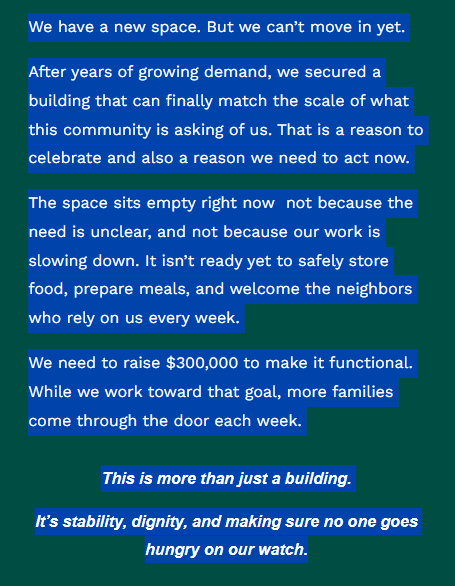
The organization is asking the community to help support building renovation goals. Burrito Brigade needs $300,000 more to fully complete a commercial kitchen installation, food storage infrastructure, ADA-compliant upgrades and critical improvements needed.

Jennifer Denson says “This project has always been community driven. Since Waste To Taste’s start in 2020 we have not looked back. We just keep rescuing more food and growing more organized and it’s incredible to watch the impact and difference we make when we work together,”
Hundreds of volunteer hours weekly are dedicated to rescuing more than half a million pounds of food annually from grocery stores, small businesses, institutions, large food generators and local farms. This community-powered food rescue serves fresh local vegetables and fruit alongside diet and culturally specific products.
The no-barrier access free grocery store, known as Waste-to-Taste, provides households the ability to supplement other systems of support that often have eligibility requirements. Waste-to-Taste serves more than 10,000 households annually.
Rescued food is also redirected through other sustainable distribution channels. Food scraps and spoiled food are diverted to feed farm animals like chickens, goats and pigs, sanctuary animals at a local emu ranch and wolf rescue, and even a mealworm farm.
According to Burrito Brigade, the community connection and creativity around food in the kitchen includes partners in many mutual aid food projects facilitating hot meals, food preservation, community-led cooking classes, food micro-entrepreneurs and youth workforce training. The new community food hub will open its doors to the public in 2027. You can DONATE here: https://www.zeffy.com/en-US/donation-form/donate-to-help-us-build-a-food-hub

Skinner Butte Park summit parking lot is now closed to motorized vehicles due to fire danger. The closure will remain in effect until October.
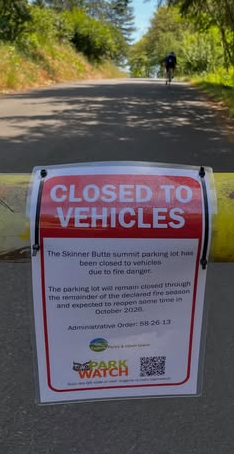
City of Eugene’s Parks and Open Space, in cooperation with Eugene Springfield Fire, have closed the Skinner Butte parking lot and summit road. It will be closed until sometime in October.
There has been a history of illegal firework activity and brush fires, particularly during the summer season.
Closing this area to vehicles helps reduce that risk. The summit will remain accessible to pedestrians and cyclists (no e-motorcycles) by numerous trails and the paved road that leads to the summit.

Lane County will participate by setting up donation barrels for staff to donate at Lane County owned properties.
“Food for Lane County is already seeing high numbers of pantry visitors at a time when our food supply has been limited due to federal program cuts. We want all Lane County residents to have the food and resources they need to thrive, and we’re very concerned about the welfare of our community if SNAP benefits aren’t available.” said Food for Lane County Director of Development and Communications, Rebecca Sprinson.
For individuals and families in need of food, please visit the FFLC food finder, at:
Those interested in donating can do so by visiting: https://www.foodforlanecounty.org/ways-to=give/donate or by calling 541-343-2822.
$18.95 can help feed 120 people.
 Every weekend, the volunteer crew at Burrito Brigade rolls hundreds of delicious vegan burritos to help close the hunger gap here in Eugene. Each box of tortillas — just $18.95 — helps feed 120 neighbors.

Could you spare $18.95 to help? Even better — could you make it a monthly donation to keep those burritos rolling all year long?
Every dollar makes a difference in these times of need. Thank you for being part of the Brigade.  Donate here: https://www.zeffy.com/donation…/we-rise-by-lifting-others Support our Mission: BurritoBrigade.org

White Bird Clinic – · Crisis intervention is a 24/7 need in our community, and CAHOOTS, as part of White Bird Crisis Intervention programs, responds.
White Bird CAHOOTS Springfield Coverage: 11 am – 11 pm, 7 days a week (541-726-3714)
White Bird Clinic
This year marks 60 years of community health centers transforming care across the U.S. At White Bird Clinic, we’re proud to be part of this legacy – bringing whole-person care to our community’s most vulnerable neighbors for more than 50 years! From medical and dental services to harm reduction and crisis response, we’re here to meet people where they are.Learn more about community health at the link below: https://www.nachc.org/about-nachc/history-of-chc/
Whole Community News Report on CAHOOTS:
Since December of 2023, Eugene lost the University District hospital and the Hourglass Crisis Center, and as of last week, CAHOOTS. These were no-barrier treatment access points for our most vulnerable neighbors to receive care when experiencing a mental health crisis. READ MORE: https://wholecommunity.news/2025/04/20/public-comments-ask-city-not-to-lose-cahoots-too/

Contact for Services — Phone: CAHOOTS is dispatched within the Springfield urban growth boundary through the non-emergency number, 541-726-3714.
Starting in the new year, White Bird Dental Clinic will offer more walk-in clinic times. Currently, we offer walk-in clinics at 1415 Pearl St. every Monday and Wednesday at 7:30 a.m. In January, we will also add every other Friday at 7:30 a.m. Find more information at whitebirdclinic.org/dental
EWEB Emergency Water Stations
The final emergency water station has been officially installed in Eugene as part of the Eugene Water & Electric Board’s disaster preparedness plan.
This is where people can access water in case of earthquakes, wildfires, or other events that could disrupt or limit access to the city’s water system.

Other locations are the Eugene Science Center, Howard Elementary School, Prairie Mountain School, Amazon Park-YMCA, the Sheldon Fire Station, and the Lane Events Center and Fairgrounds.
All seven locations across the city of Eugene draw their water from underground wells. The intent is to provide individuals up to two gallons of water a day during an emergency. MORE INFO at EWEB: https://www.eweb.org/projects/emergency-water-stations
Oregon Food Bank · Find free food sites near you using OregonFoodFinder.org.
If you can’t make it to a food location, someone else can pick up food for you.You will just need to print and fill out the Authorized Representative form at https://lnkd.in/dsskUpkQ, and have them take it with them to the food sites. You can find step-by-step instructions at https://lnkd.in/dVBRxn-A.
Worried about recent changes or losing assistance?
Here are resources that can help:
211Info: Dial 2-1-1 or visit the211Info food webpagefor information and referrals to more than 1,500 food resources across Oregon.
Oregon Food Bank: Use the Oregon Food Bank’s Food Finder Mapto find over 100 food pantries, free food markets or hot meal programs near you.
Aging and Disability Resource Connection of Oregon (ADRC): Call 855-673-2372 or visit theADRC food webpage to find local meal programs and food boxes in your area.

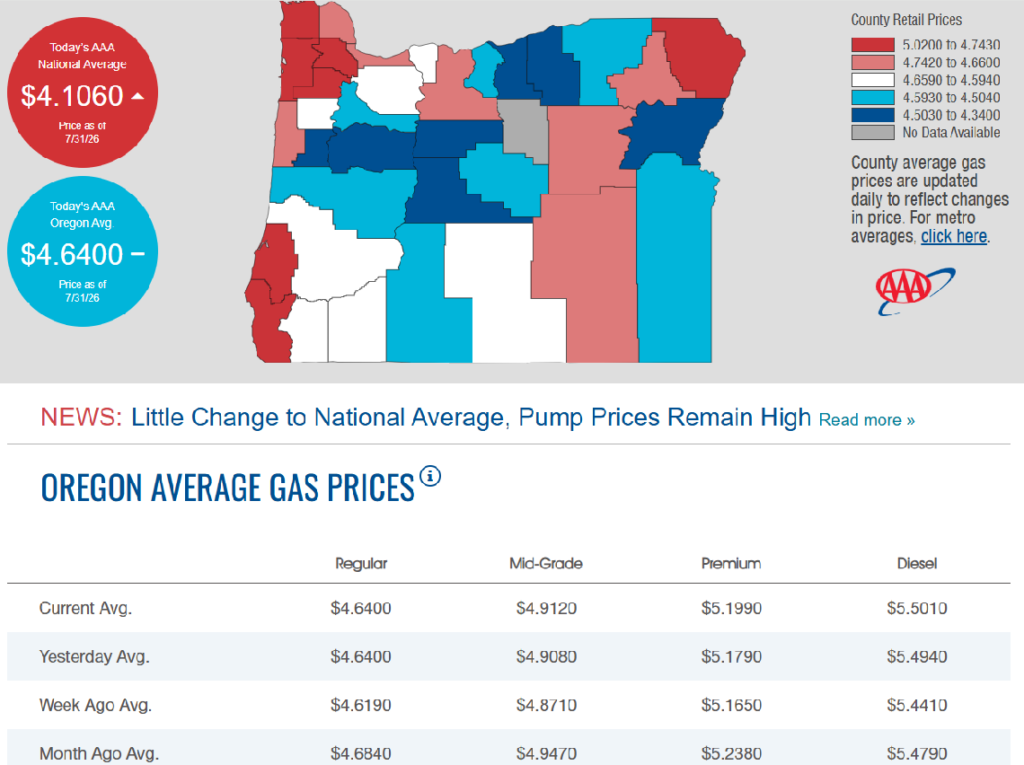
7/31/2026 — Gas Prices in Oregon Today
Oregon state agencies remind everyone to be informed and prepared

Photo taken of the East Evans Creek Road Fire by OEM Public Safety Communications Specialist, Jeff Perkins.
— With the National Weather Service issuing a fire weather watch for Saturday across large portions of north‑central, northeast and southeast Oregon, the state’s public safety services, natural resource agencies, and tourism office want to remind residents and visitors to practice wildfire prevention, prepare their home and a go-bag for evacuation, and know where to go for real-time alerts and information.
According to the Northwest Interagency Coordination Center’s predictive services, each year the Pacific Northwest is at elevated risk of significant fires from now until October. With fire crews responding to new fire starts every day, Oregonians and our visitors need to be prepared for wildfires, help prevent future ones, and be aware of up-to-date conditions as they travel across the state.
How can people help prevent wildfires?
The Oregon Department of Forestry is urging the public to actively practice wildfire prevention as the state continues to put out new fires every day. Additional human-caused fires on the landscape will draw the firefighting efforts away from the lightning-caused fires and put extra strain on ground and aviation resources, which are already spread thin. YOU can help prevent wildfires by:
- Checking and following your local fire regulations. The majority of the state is either in high or extreme fire danger right now, meaning even the smallest of sparks could start the next large wildfire.
- Debris burning may be prohibited where you live.
- Check local restrictions or contact your local ODF office.
- Return to check on your burn site if you burned earlier in the year.
- Make sure your car has been recently serviced to avoid faulty parts throwing sparks.
- Don’t drag tow chains.
- Avoid parking vehicles on tall, dry grass.
- Recreate responsibly. Where campfires are allowed, make sure your campfire is DEAD OUT before leaving it by drowning it with water, stirring it with a shovel and repeating that process until it is cold to the touch. If there is heat coming off it, there are still embers that could reignite.
Take Simple Steps to Protect Your Home from Wildfire
The Oregon State Fire Marshal reminds Oregonians that summer is not the safest time to tackle large landscaping or defensible space projects. Hot, dry conditions increase the risk of starting a fire from using tools or equipment. There are small, safe steps you can take now to reduce wildfire risk around your home. The Oregon State Fire Marshal encourages everyone to plan ahead and do light cleanup tasks that protect your property without increasing fire danger.
Easy tasks to reduce risk in the first five feet around your home:
- Clear leaves, pine needles, and other debris from your roof, gutters, and under decks.
- Trim plants and bushes that are touching your home or growing under roof eaves. Give trees and shrubs space from each other and from structures.
- Remove dead plants and wood mulch. Use nonflammable materials like rocks or gravel near your home. Avoid bark mulch or dry grasses right next to buildings.
- Move firewood, propane tanks, and other flammable items at least five feet away from your home.
- Cover attic vents, soffit vents, and spaces under decks with 1/8-inch metal mesh to block embers.
Avoid using power tools or equipment that could spark a fire, especially during the heat of the day. Summer is a good time to plan defensible space projects, so you’re ready to work safely once wildfire season ends.
For more tips or help with defensible space, visit www.oregondefensiblespace.org or https://preventwildfires.oregon.gov.
How can I prepare myself in case I need to evacuate?
The Oregon Department of Emergency Management (OEM) urges everyone to prepare for wildfires and other emergencies by knowing evacuation levels, staying informed, having a plan, and having a go-kit ready.
Evacuation Levels
- Oregon follows a three-level evacuation notification system, each structured around safety threat level.
- Oregonians should become familiar with “Be Ready, Be Set, Go!” evacuation levels to make informed decisions when receiving evacuation notices.
- OEM urges people to evacuate whenever they feel unsafe, conditions can change rapidly; individuals should always make the best decision for their safety.
- Following evacuation, people should not return to the area until public safety officials state it is safe.
Stay Informed
- Stay informed, sign up to receive evacuation at, ORAlert.gov remember to update information if need be.
- Find the websites for your county emergency management, sheriff’s office, or tribal police and follow them on social media.
- Check your phone settings to ensure wireless emergency alerts are turned on.
- Build redundancy into how you can access alerts. Have a personal C.E plan for what you will do if your cell phone stops working. A good place to start is a hand-cranked NOAA radio.
- If you use a third-party app for alerts and situational awareness and notice discrepancy information, default to the information provided by your local emergency management office.
Have a Plan
- Do you know what to do during an evacuation? This evacuation checklist explains what to do before, during and after an evacuation.
- Establish a communication plan with a list of important contacts and a safe place for loved ones to meet if they are separated during an emergency.
- Identify multiple evacuation routes from home, work, or school and plan for transportation needs.
- People with disabilities should consider individual circumstances and specific needs when planning for evacuation, such as special equipment, transportation, and service animals. Then plan extra time, when possible, this may mean treating a level 2 notice like a level 3 notice.
- Have an evacuation plan for pets, make a pet evacuation kit in a tote bag or pet crate, and plan for transportation and sheltering of large animals such as horses and other livestock.
Make a Go-Kit
- Assemble an emergency kit of essential supplies that can be grabbed quickly.
- Pack an easy-to-carry backpack or bag for each household member with health and safety items such as food, water, medication, flashlights, phone chargers, clothing, and important documents. Visit American Red Cross to learn more.
- Find more information and resources at Wildfire.Oregon.gov.
Recreate Responsibly
Oregon Parks and Recreation Department (OPRD) encourages visitors to know before they go when it comes to campfire restrictions. OPRD coordinates with local fire officials throughout the summer and bans open flames in high-risk areas around the state until conditions improve. Please check park webpages or the current fire restrictions list before your next visit. Thank you for helping to reduce the risk of wildfires.
Additionally, many waterways in eastern Oregon are currently being used by firefighting aircraft. Stay clear of the center of major waterways. Recreational boats can block aircraft from accessing the water, which means they will not be able to retrieve water to help put out nearby wildfires.
Occasionally, OPRD will need to evacuate a state park. Evacuations occur at level 2 or earlier depending on fire conditions and the time required to get in and out of the park. Please follow park ranger instructions to pack gear and evacuate. Any park closure information will be posted on the park web page and OPRD social media.
How do I know if I should change my vacation plans?
Oregon is a large state, and while wildfires can disrupt travel in some regions, those impacts are often localized and can change rapidly as conditions improve or deteriorate. Because of this, it’s important to check current alerts at the resources below to see whether your destination is affected. If you’re looking for general guidance about traveling during wildfire season, read Travel Oregon’s Wildfire Travel FAQ.
Before You Go:
- Check road conditions at TripCheck.com or by calling 511.
- Review and follow all local fire restrictions and closures.
- Be aware of air quality conditions that could impact health and visibility.
- View real-time hazard updates, maps, and fire information through OEM’s Wildfire Dashboard.
- Sign up for emergency alerts at ORAlert.gov and ensure Wireless Emergency Alerts are enabled on your mobile device.
Statewide hotline available for Oregonians affected by wildfires and smoke
People anywhere in Oregon who have been affected by wildfires or wildfire-related air quality can call 1-833-699-0554 24 hours a day, seven days a week.


The statewide hotline is available to people experiencing any wildfire-related impact, including those who:
- Lost a home or property
- Evacuated and have ongoing needs
- Are sheltering in place and have wildfire-related needs
- Are affected by wildfire smoke or poor air quality
- Have another need or concern caused by a wildfire
“During this difficult wildfire season, Oregonians impacted by fires deserve immediate and reliable access to the help they need,” said Governor Tina Kotek. “That’s why we’ve established a dedicated, 24/7 hotline – so that no Oregonian has to navigate this wildfire season alone or wonder where to turn to for help.”
The hotline is staffed by 211info. If a call is not answered, callers can leave a message and will receive a return call within one business day.
This hotline does not provide emergency evacuation assistance or help people locate immediate shelter. People who are in immediate danger, have a medical emergency, or need emergency help evacuating should call 911. People looking for information about shelters or other immediate resources can call 2-1-1. For current 211info operating hours, visit 211info.org.
People can also enter their contact information and describe their wildfire-related needs using the Oregon Wildfire Assistance web form. An ODHS staff member will review the information and follow up with them.
“This wildfire season is already affecting a growing number of Oregon Tribes and communities,” said Ed Flick, Director, ODHS Office of Resilience and Emergency Management. “Wildfires can affect people in many ways, even when their homes have not burned. We want people to know there is one place they can call to share what they are experiencing and learn what resources may be available.”
In previous years the hotline has been used to connect people who lost homes in disasters with recovery support. This year, the Oregon Department of Human Services is expanding it to people experiencing a broader range of wildfire impacts.
ODHS has informally coordinated individual assistance following Oregon disasters since 2020. This year, Governor Tina Kotek directed ODHS to be ready to formally activate individual assistance when needed as the state prepares to establish a formal program in 2027 under House Bill 4121.
211info and ODHS will work with local communities to connect people with existing programs and local resources. If those resources are not enough to meet the level of need, ODHS will work with state leaders to identify additional support and funding options.
The hotline does not guarantee financial assistance or eligibility for a particular program. Staff will listen to each caller’s experience, document their needs and help identify available resources and next steps.
Hotline information
- Call: 1-833-699-0554
- Available: 24 hours a day, seven days a week
- Missed calls: Leave a message and your call will be returned within one business day
- Shelter and other immediate resource questions: call 211
- Emergencies or emergency evacuation help: call 911
PLAN AHEAD: The National Weather Service has fire weather watches in place for much of Oregon east of the Cascades. We are anticipating a challenging few days ahead with hot, dry conditions and gusty winds expected on Saturday. Please be #WildfireAware.

Know the evacuation levels, make sure you are signed up for emergency alerts, and have a plan in place if you have to evacuate. The weather for Saturday is very concerning for several fires across Oregon. Our teams and wildland partners are working 24/7 to make sure they are prepared for the weekend ahead.
You can find the latest fire weather forecast on www.weather.gov/fireWe are posting updates for fires we have resources assigned to on https://osfminfo.orgSign up for emergency alerts at https://oralert.gov
“The current wildfire situation in Oregon is the worst in the nation—but FEMA denied federal resources for the East Evans Creek Fire and the Rowe Creek Fire Complex. Oregonians deserve answers—and Senator Ron Wyden and I are pressing to get them.”
As Wildfires Burn 1+ Million Acres Across Oregon, Merkley, Wyden Press FEMA on Denial of Emergency Federal Assistance
– Oregon’s U.S. Senators Jeff Merkley and Ron Wyden demanded urgent answers from the Federal Emergency Management Agency (FEMA) in response to the agency’s denial of Fire Management Assistance Grants (FMAGs) for two wildfires in Oregon: the East Evans Creek Fire and Rowe Creek Fire Complex.
Both fires were under Level 3 “Go Now” Evacuation at the time of application, and the Rowe Creek Fire Complex was the largest in the nation. The current fire situation in Oregon remains the worst in the nation.
“FEMA’s decision to deny these FMAGs is a significant departure from FEMA’s historical criteria and agency guidance,” wrote the Senators. “According to State officials, FEMA’s criteria for an FMAG has been, in part, that 150 primary residences must be in immediate threat of wildfire, gauged often as Level 3 ‘Go Now’ Evacuation status. In recent years, State officials have seen an increase to over 200 primary residences as a threshold—which the East Evans Creek Fire and the Rowe Creek Fire Complex had still surpassed.”
The State of Oregon requested financial assistance from FEMA through FMAGs, which help cover costs relating to emergencies and firefighting activities for fires that have the potential to become major disasters. FEMA’s decision to deny these specific FMAGs comes as Oregon faces an increasingly dangerous fire season—with at least 86 active fires burning over 1 million acres and over 33,000 Oregonians under evacuation orders as of July 27, 2026.
“FEMA has also indicated that the East Evans Creek Fire and the Rowe Creek Fire Complex were denied an FMAG because they did not meet the criteria for a major disaster declaration,” the Senators continued. “This is a major shift in administrative policy and contrary to Federal regulation and FEMA’s own policy manual, which states that an FMAG designation is warranted when a fire ‘threatens such destruction as would constitute a major disaster.’ This program is meant to provide resources to fires that have the potential to become major disasters if left unchecked. Resources should not—and are not supposed to be—withheld until a fire becomes so destructive as to receive a major disaster declaration.”
Merkley and Wyden highlighted how FEMA’s inconsistent approval of FMAGs threatens to cause disruptions for first responders and at-risk communities. The Senators pressed FEMA for clear answers on its decision-making and criteria for FMAGs and stand ready to assist in ensuring Oregon has the necessary federal resources to respond to wildfires and keep communities across the state safe.
“We want to stress that this is not the time for creating new or different criteria for accessing this critical funding to support initial attack. As you know, Oregon is strained for resources, and the State is still at the beginning of its wildfire season. We urge the agency to provide clarity and maintain consistency with prior years’ approval process,” the Senators directed.
Full text of the letter can be found by clicking here and follows below:
Dear Mr. Fenton and Mr. Maykovich,
We write to express deep concern over the Federal Emergency Management Agency’s handling of the Fire Management Assistance Grant (FMAG) program in light of recent events. The State of Oregon is currently in a dire wildfire situation—the worst in the nation—with 86 active fires, as of July 27th, burning over 1 million acres with over 33,000 Oregonians under some level of evacuation and widespread impacts to critical infrastructure, including water and power, affecting alert and warning and 911 capabilities.
While we appreciate FEMA’s approval of FMAGs for select recent fires, including the Lower Dry Creek Fire, Akawa Butte Fire, and Grasshopper Fire, we are deeply concerned by the agency’s denial of FMAGs for the East Evans Creek Fire and Rowe Creek Fire Complex, which at the time of application was the largest fire in the country.
In the case of the East Evans Creek Fire, the State reported that the fire had reached nearly 16,000 acres with over 230 homes at a Level 3 “Go Now” Evacuation and was denied by FEMA on July 22, 2026. The fire was also threatening county, state, and federal roads and bridges, radio and cell towers, gas and private electric utilities, campgrounds, trails, retail businesses, irrigation infrastructure, and agricultural operations.
The Rowe Creek Fire Complex was denied an FMAG under similarly severe circumstances with over 401 people at a Level 3 “Go Now” Evacuation on July 24, 2026. The fire was also threatening private electrical cooperatives, public safety radio, private commercial radio, and transmission lines. Since that denial, the fire has surpassed 200,000 acres and the State is preparing for the Complex to merge with the nearby Brewer Fire.
FEMA’s decision to deny these FMAGs is a significant departure from FEMA’s historical criteria and agency guidance. According to State officials, FEMA’s criteria for an FMAG has been, in part, that 150 primary residences must be in immediate threat of wildfire, gauged often as Level 3 “Go Now” Evacuation status. In recent years, State officials have seen an increase to over 200 primary residences as a threshold—which the East Evans Creek Fire and the Rowe Creek Fire Complex had still surpassed.
FEMA has also indicated that the East Evans Creek Fire and the Rowe Creek Fire Complex were denied an FMAG because they did not meet the criteria for a major disaster declaration. This is a major shift in administrative policy and contrary to Federal regulation and FEMA’s own policy manual, which states that an FMAG designation is warranted when a fire “threatens such destruction as would constitute a major disaster.” This program is meant to provide resources to fires that have the potential to become major disasters if left unchecked. Resources should not—and are not supposed to be—withheld until a fire becomes so destructive as to receive a major disaster declaration.
Inconsistent criteria for the approval of FMAGs is creating unnecessary confusion for emergency responders. For this reason, we request further information on FEMA’s decision-making and criteria for FMAG approvals and denials. Please provide a response to the following no later than August 10, 2026:
- Pursuant to 44 CFR 204.21, what criteria is being used to determine a fire’s eligibility for an FMAG? Please include all quantitative metrics.
- Explain how the East Evans Creek Fire and Rowe Creek Complex Fire did not meet each of these criteria.
- Who at the Department of Homeland Security and FEMA is involved in determining an FMAG designation, and what guidance has been issued to the officials involved in determining an FMAG designation? Please provide copies of all relevant guidance, including informal communications and official documents.
- Which FMAG eligibility criteria changed from 2025 to 2026? How were these changes developed and who was consulted prior to implementing them?
- What data, in addition to the state-provided data, is FEMA relying on to make their determination?
- Broken down by state, how many FMAGs have been approved and denied per year in the past 10 years?
We want to stress that this is not the time for creating new or different criteria for accessing this critical funding to support initial attack. As you know, Oregon is strained for resources, and the State is still at the beginning of its wildfire season. We urge the agency to provide clarity and maintain consistency with prior years’ approval process.

 PACIFIC NORTHWEST WILDFIRE UPDATE
Oregon is currently home to the four largest active wildfires in the United States, with the fifth largest burning in Washington, as fire activity remains elevated across the Northwest and much of the West.
Washington and Oregon continue to battle an extraordinary wildfire season, with more than 1.72 million acres burning across dozens of large active fires.
Washington: 205,055 acres are burning across 12 major incidents, led by the Kaiser Canyon Fire (126,402 acres).
Oregon: 1,516,034 acres are burning across 22 large fires, with the Rowe Creek Complex (294,000 acres) and Big Grass Fire (292,087 acres) among the largest in the nation.
Firefighters continue working around the clock in steep terrain, extreme heat, low humidity, and challenging wind conditions to protect lives, homes, and critical infrastructure. Many communities remain under evacuation notices or heightened fire weather concerns, and conditions can change rapidly.
Please continue to respect closures, follow evacuation orders immediately if issued, and give emergency responders the space they need to do their jobs safely.
 To all firefighters, dispatchers, aviation crews, law enforcement, EMS, and support personnel—thank you for your dedication and sacrifice.Stay informed. Stay prepared. Stay safe.
CRITICAL FIRE WEATHER CREATES HIGH FIRE DANGER
Fire Officials Seek Public Cooperation — Critical fire weather conditions, including Red Flag Watches and Warnings, are underway across the Geographic Area, creating an increased risk for rapid wildfire growth. Fire officials urge residents and visitors to help prevent wildfires by avoiding activities that could spark a fire, following local fire restrictions, and staying informed about changing conditions. The public should also monitor evacuation information and be prepared to act quickly if conditions change.
“Right now, everyone needs to be extremely careful,” said Jeff Fedrizzi, Chair of the Pacific Northwest Wildfire Coordinating Group. “Current fire conditions mean that just one spark, a discarded cigarette, or an unattended open flame can ignite the next wildfire. After the lightning we’ve received over the past 10 days and the number of new fires already burning across the landscape, we need the public’s help to prevent additional fires and protect our firefighters, our communities, and our natural resources.”
Fire officials across Oregon and Washington remind residents and visitors that fire restrictions and area closures are in place to reduce the risk of human-caused wildfires during this period of extreme fire danger. Know before you go by checking local fire restrictions and area closures before recreating outdoors. Common activities that can ignite dry vegetation include mowing dry grass, driving off designated roads, operating equipment that creates sparks, and building campfires. Many of these activities are currently prohibited or restricted because of extreme fire conditions. Stay clear of active wildfire areas and firefighting operations. Do not drive to view wildfires, as traffic can delay emergency responders, hinder firefighting efforts, and create additional safety hazards. If you encounter smoke while driving, slow down and use extra caution.
Before traveling or recreating outdoors, check the latest road closures, fire restrictions, fire activity, and evacuation information:
Road Conditions
• Oregon: TripCheck – https://tripcheck.com/
• Washington: WSDOT Real-Time Travel – https://wsdot.com/travel/real-time/
Evacuations & Emergency Alerts
• Oregon: https://oralert.gov/
• Washington: https://mil.wa.gov/alerts
Current Fire Information
• InciWeb: https://inciweb.wildfire.gov/
• Northwest Interagency Coordination Center: https://gacc.nifc.gov/nwcc/
• Air Quality: https://fire.airnow.gov/
Your decisions matter. Stay informed, follow local restrictions and evacuation orders, and help keep yourself, your community, and our firefighters safe.
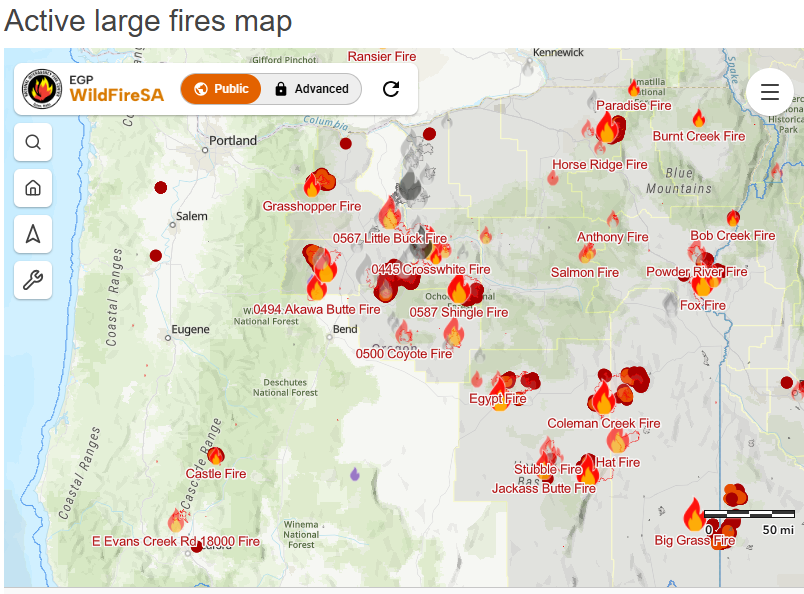
Oregon has already seen more acres burn in 2026 than in all of 2025, and fire officials warn there’s still a lot of wildfire season to get through.

As wildfires impact communities across Oregon, we can all do our part to support our neighbors and the people working on the front lines. Donate or volunteer through trusted organizations, stay informed, and follow local guidance. Together, we can help communities respond, recover, and stay safe. For more info on how you can help, visit: https://orvid.oregon.gov/
Northwest Fire Crisis: PL5 Declared as Global Aid Arrives
The Northwest Area, primarily covering Oregon and Washington, has officially escalated to National Preparedness Level 5 (PL5), the highest tier in the federal fire management system, signaling that the current fire season has exceeded the region’s organic capacity to suppress the blazes.

This escalation triggers a massive, country-wide mobilization of resources and has prompted the arrival of specialized international firefighting personnel to bolster containment efforts. As the Klamath Falls Airtanker Base operates at peak capacity, the deployment of C-130 airtankers represents a critical reinforcement in a battle against increasingly erratic and volatile wildfire behavior.
Key Highlights
- PL5 Escalation: The Northwest Interagency Coordination Center (NWCC) has moved to Preparedness Level 5, indicating all available suppression resources are committed and new fire starts are critically straining local capabilities.
- Global Reinforcements: 15 highly specialized fireline management personnel from Australia and New Zealand have been deployed to the U.S. to assist with command and control, leveraging international experience with large-scale wildfire events.
- Air Support Surge: C-130 airtankers have been stationed at the Klamath Falls Airtanker Base, serving as heavy-duty assets to provide rapid retardant drops in high-risk zones.
- Operational Strain: The shift to PL5 implies a need for National Interagency Fire Center (NIFC) oversight, ensuring that the most critical fires receive priority allocation for national resource sharing.
The Strategic Mobilization of PL5: Understanding the Crisis
The declaration of Preparedness Level 5 is rarely taken lightly by the National Interagency Fire Center (NIFC). It serves as a stark metric of systemic exhaustion within the firefighting community. When the Northwest Area—a region traditionally resilient to fire volatility—reaches PL5, it signifies that the operational complexity, fuel moisture levels, and weather conditions have aligned to create a scenario where local resources are no longer sufficient to maintain an aggressive initial attack strategy.
At this level, the focus shifts from localized containment to a national priority system. Decisions on where to allocate heavy equipment, hand crews, and air support are no longer made by individual districts but are brokered through interagency coordination committees. This shift effectively places the Northwest’s wildfire response under a centralized federal lens, ensuring that when assets—like the C-130 airtankers—become available, they are directed to the most life-threatening and property-endangering blazes, rather than being tied to jurisdictional boundaries.
International Expertise: Why Australia and New Zealand?
The arrival of 15 fireline management personnel from Australia and New Zealand is a testament to the long-standing, reciprocal wildfire agreements between these nations and the United States. While the public often focuses on the physical labor of fire suppression, these specialists are brought in specifically for their expertise in management, logistics, and planning. These professionals, many of whom have managed catastrophic bushfire seasons in their home countries, provide a “force multiplier” effect.
They are embedded into existing incident command teams, offering fresh strategic perspectives on fire behavior modeling and resource management. By integrating these international experts into the command structure, U.S. agencies can optimize the deployment of limited personnel, preventing burnout and ensuring that fatigue management protocols are strictly followed—a critical factor when the fire season stretches into record-breaking durations.
The Klamath Falls Hub: The Role of Heavy Air Power
Klamath Falls, Oregon, has become a pivotal staging ground for the current response. The base acts as a critical node in the aerial firefighting network, specifically housing heavy-lift assets such as the C-130 Hercules airtankers. These aircraft are not merely support vehicles; they are surgical tools in the suppression effort. Capable of dropping thousands of gallons of fire retardant in a single pass, they are essential for creating “control lines” in rugged, inaccessible terrain where ground crews cannot safely operate.
For the pilots and support crews at the Klamath Falls Airtanker Base, the transition to PL5 means operating under intensified tempo. The logistics of reloading retardant, refueling, and performing pre-flight checks must be streamlined to ensure that aircraft spend the minimum amount of time on the ground. This heavy air support is the “break-glass-in-case-of-emergency” asset; its presence in Klamath Falls underscores the severity of the threat to Oregon’s wildland-urban interface.
Secondary Angles: Resilience, Economics, and the Future
1. The Evolution of the Wildfire Season
Historically, the fire season had distinct start and end points. The current, unprecedented length and intensity of the season suggest a shift in the region’s climate baseline. The escalation to PL5 early in the cycle suggests that agencies are effectively fighting against the calendar, forced to maintain high-level readiness for longer durations than current infrastructure was originally designed to handle.
2. Economic Impact of Resource Allocation
The cost of suppression at PL5 is exponential. Beyond the direct cost of fuel and aircraft maintenance, the economic displacement involves the shutdown of forestry and tourism industries across the Northwest. The “opportunity cost” is also significant: by tying up limited resources in one area, other regions are left vulnerable, creating a cascading effect where a fire in one state impacts the safety and insurance premiums of another.
3. The Reciprocal Agreement as a Future Necessity
The success of the current deployment of personnel from Australia and New Zealand highlights that cross-border cooperation is no longer an optional courtesy—it is a functional requirement. Future fire management strategy will likely involve formalized, year-round exchanges of personnel, treating the global “fire season” as a single, rotating operational threat that requires a permanent, internationally integrated workforce. (SOURCE)
Protect Yourself from Fraud Amid Wildfire Recovery
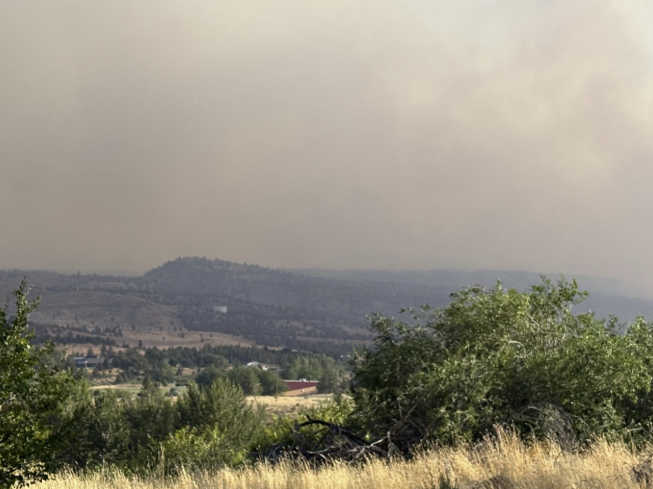 Photo taken by Sophi Beym, OEM Tribal Liaison, of smoke over the Warm Springs Reservation
As Oregon communities respond to widespread damage from the 2026 wildfires the Oregon Department of Emergency Management (OEM) is urging residents to stay cautious and informed to avoid falling victim to fraudulent schemes, particularly those involving online fundraising platforms.
When disasters strike, Oregonians come together to support neighbors and communities. Unfortunately, scammers may try to exploit that generosity by creating fake fundraising campaigns or misrepresenting their intentions. Fraud attempts may come via phone calls, mail, email, text messages, or even in‑person visits. To help protect yourself and your donations, OEM offers the following guidance:
Double Check Your Charitable Donations
- Verify the campaign’s authenticity: Only donate to fundraisers created by people or organizations you know and trust. Look for detailed, transparent information about how funds will be used. You can verify charitable organizations on the Oregon Department of Justice Charitable Activities page.
- Check for secure websites: Ensure the fundraising platform uses a secure connection (“https://” and a padlock icon). Avoid clicking suspicious links shared by email or social media.
- Be cautious with personal information: Never share sensitive details like Social Security numbers or financial data with unverified individuals or groups.
- Monitor for identity theft: Check your credit report regularly for unfamiliar accounts or changes. If you suspect identity theft, file a complaint at IdentityTheft.gov and consider freezing your credit accounts.
- Report suspected fraud: If you believe a fundraising campaign or donation request is fraudulent, contact the Oregon Department of Justice Consumer Protection Hotline at 1‑877‑877‑9392 or visit OregonConsumer.gov.
- Protect your donations: Avoid cash. Use checks or credit cards to maintain a secure, trackable record. Sign up for DOJ Scam Alerts through the Oregon Department of Justice Scam Alert Network.
Avoid Contractor Scams During Wildfire Cleanup and Repairs
As residents begin debris removal, structural assessments, and home repairs, fraudulent contractors may target those seeking quick assistance. Keep these tips in mind:
- Research contractors thoroughly: Ensure the contractor is licensed, bonded, and insured. Check reviews and references through trusted sources such as the Oregon Construction Contractors Board.
- Get written estimates: Obtain multiple detailed, written estimates. Avoid contractors who demand large upfront payments or offer unusually low prices.
- Avoid high‑pressure sales tactics: Take time to review contracts and make informed decisions.
- Never pay in cash: Use checks or credit cards to maintain a paper trail and added security.
- Beware of door‑to‑door solicitations: Scammers may approach residents with unsolicited “fire recovery” offers. Always verify credentials and legitimacy.
Key Fraud Prevention Reminders
- Public aid is free: There are no costs to apply for disaster assistance or participate in inspections.
- Verify government workers: Inspectors and officials will always carry identification and will never request or accept money.
- Trust your instincts: If something seems off, contact law enforcement or your local emergency management office to confirm the validity of claims.
- Follow trusted information sources: Monitor local media outlets and official state and county emergency management channels for accurate updates.
Nonprofit Organizations Collecting Monetary Donations to Support Oregon Disaster Response
Financial gifts remain the most effective way to assist people affected by wildfires. They just take a bit more diligence. Monetary donations allow disaster response organizations to purchase exactly what is needed, when and where it is needed. People seeking trusted organizations currently involved in wildfire response can dial 211 or visit 211info.org.
- Oregon Voluntary Organizations Active in Disaster
- Oregon Community Foundation
- Wildland Firefighter Foundation
- United Way Pacific Northwest Disaster Recovery Fund
- American Red Cross Cascades Region
- Confederated Tribe of Warm Springs
All trusted state partners and agencies remain committed to supporting wildfire survivors and preventing the fraudulent activity that slows recovery. Together, we can protect our communities, ensure donations reach those who need them most, and safeguard survivors from fraud and identity theft.
For more information on wildfire recovery resources in your area, contact your local or Tribal Office of Emergency Management. If you have questions or concerns about donation requests you’ve received, contact your local law enforcement agency.
New report: Patient care at risk as Oregon hospitals’ financial crisis deepens
A new report from the Hospital Association of Oregon finds that hospitals across the state experienced staggering losses in 2025, forcing them to make painful decisions: Service lines and inpatient beds have closed, while more than 1,000 health care workers have lost their jobs. The impacts of H.R.1 will deepen this crisis, underscoring the urgent need for policy solutions to support and stabilize Oregon hospitals.
The report, A fraying safety net: Oregon hospitals in crisis, reveals that in 2025 hospitals lost $450 million caring for patients due to rising labor costs, Medicaid and Medicare payments that don’t cover the cost of care, bad insurer behavior, and costly state regulations.
“There isn’t a silver lining in these numbers,” said Becky Hultberg, president and CEO of the Hospital Association of Oregon. “Oregon hospitals are slipping deeper into crisis. After five years of losses at many of our hospitals, the consequences are impossible to ignore. Communities are losing services, patients have fewer options for care, and more than 1,000 Oregonians have lost their jobs.”
The challenges are statewide and widespread. In 2025, more than half of all hospitals in Oregon operated at a loss. This includes most of the state’s larger hospitals and more than 40% of the state’s smaller, often rural hospitals. As a result, more than 80% of the hospital beds in Oregon were at hospitals with unsustainable margins.
A convergence of factors is contributing to this crisis:
- Hospitals are being squeezed on both sides. Government payers (Medicare and Medicaid) use two-thirds of hospital services and don’t come close to covering the cost of care, while at the same time commercial health insurers delay and deny payment for services.
- The cost of operating a hospital in Oregon has increased 57.5% since 2020—driven by tariffs, supply shortages, pharmaceutical costs, labor costs, and regulatory changes.
- Oregon has layered on an increasingly complex and costly regulatory framework over the last decade, diverting resources from patient care and creating one of the most difficult operating environments in the country for hospitals.
Oregon hospitals are bracing themselves for further financial shocks as the impacts of H.R. 1 take hold. The state estimates that Oregon will receive $12 billion less in federal Medicaid funding and that 200,000 Oregonians could lose health coverage.
“As the crisis at Oregon’s hospitals grows, Oregonians will be increasingly challenged to access the health care services they need,” Hultberg said. “The time to act is now. Policymakers must understand the seriousness of this moment and take the necessary steps to safeguard the care that Oregonians depend on.” – The full report is available here.
Pro-data center industry group behind ad campaign in Oregon, six other states
Oregon Connects is one of several new nonprofits registered by the Data Center Coalition, an industry group backed by major tech companies

Just days before the Oregon Legislature in March passed a one-year pause on a popular tax incentive program for data centers, a group called Oregon Connects registered as a nonprofit business in the state. Then the ads started appearing.
“From homes to hospitals to businesses, Oregon’s data centers are unlocking a smarter power grid for our communities,” a female voice reads over a montage that includes a few aerial shots of downtown Portland and the Oregon Coast. “They’re investing billions in clean energy, creating good-paying jobs, driving innovation and building a better energy future.”
The 30-second ads, which feature B-roll of a family cooking together, a nurse and a business owner, are a near-carbon copy of ads playing across TV and social media in at least six other states. They all attempt to counter common critiques of data centers, including their enormous demand for water, energy, land and relatively low levels of job creation compared to the tax breaks they receive to spur economic development. And they end with a similar line: “Oregon’s data centers: committed to paying their costs, so Oregon families don’t.”
Oregon Connects paid for the Oregon ads, while similar promotional campaigns in other states are sponsored by Indiana Connects, Connected Ohio, North Carolina Connects, Pennsylvania Connects, Texas Connects and Virginia Connects.
They’re all part of a network of groups created by the nonprofit Data Center Coalition, an industry group hoping to improve public opinion of data centers as pushback grows. In each of these states, a growing number of local governments and legislatures are considering and passing policies meant to slow data center growth.“We are not looking at a spontaneous, homegrown community campaign,” he said. “We are looking at a highly sophisticated, out-of-state public affairs blitz designed to build public consent before Oregonians can fully deliberate the real impacts on our power grid, water resources and tax structure.” (SOURCE)
Avoid contact with bats to reduce rabies exposure risk
OHA, ODFW officials say people can support important wildlife and stay safe by not touching dead or dying animals, keeping pets away
What you should know
- Bats are the natural carrier for rabies in Oregon.
- Twenty-two bats have tested positive for rabies so far in 2026.
- Don’t touch or handle dead or dying wildlife.
| —Oregon Health Authority (OHA) and the Oregon Department of Fish and Wildlife (ODFW) are urging people to prevent exposure to rabies while highlighting the importance of bats and other wildlife to the state’s ecosystems. So far, 22 bats have tested positive for rabies in 2026, according to OHA data. That means the state has matched – and is poised to surpass – its record for the number of bats that test positive for rabies in a single year. Bats have carried the rabies virus in their populations for thousands of years and are well known to carry rabies today, but generally at a very low level. Nevertheless, they account for the most human exposures to the virus more than any other species in the U.S. The highest number of animals testing positive for rabies since 2000 was in 2006, when 22 bats and two foxes were found to be carrying the disease. In 2023, 20 bats tested positive for the virus. Emilio DeBess, DVM, public health veterinarian at OHA’s Public Health Division, said the more contact someone has with bats, the higher the risk of exposure to rabies. “Unfortunately, when people find a dead or dying bat, they may pick it up with their hands because they want to help it, or maybe they’re just curious,” DeBess said. “When a bat or other wild animal is sick or dying with rabies, there’s an increased chance they will bite or transmit the virus in other ways.” Colin Gillin, DVM, ODFW state wildlife veterinarian, agrees that bats and other wildlife rarely bite people but may do so if they are sick or feel threatened. Oregon bats, in particular, eat only insects—about 1,000 insects every hour—and avoid people. “Bats provide important ecosystem services in Oregon, but also globally with insect control, seed dispersal, and pollination of specific plants, supporting agriculture and forest systems,” Gillin said. “And like many animals that can carry disease, bats can also prevent or suppress disease by reducing mosquitoes and other vectors that carry human and animal pathogens.” What to do if you find a bat — Bats are protected wildlife, which makes it illegal to harm or keep them. If you see a bat that appears to be sick:Stay calm, do not touch it, and keep people and pets away. When the sick or dead bat is indoors, do not release the bat. It may have exposed someone or a pet to rabies. If it is safe to do so, place a container or box over the bat. When the sick or dead bat is outdoors and may have exposed someone to rabies, cover it with a box or bucket to keep it in place, if safe to do so. Finding a dead bat does not require any action unless someone was bitten or scratched before the bat died. Contact your local health authority or veterinarian for your area right away to discuss potential exposures to humans or pets. If there are multiple sick or dead bats observed in an area, report it to ODFW. When a person or pet has been bitten or scratched by an animal that may have rabies, report this exposure immediately to your local animal regulation services or local public health authority. Seek medical care immediately from a medical provider or veterinarian.Teach children to avoid all contact with bats and other wildlife. Avoid bats seen in the wild, such as while hiking. Make sure your dog or cats’ vaccinations are up to date, whether they are indoor or outdoor pets. Unvaccinated pets that come into contact with a bat may be quarantined for up to four months, or euthanized. Protect your home from bats by covering vents, chimneys, and other entry points with screens. If you have roosting (nesting) bats living in your attic or other areas of your house, call a wildlife control operator (WCO). ODFW is unable to respond to homeowner requests for bat removal. Find additional information about rabies and bats at: OHA’s bats and rabies website ODFW’s bats website “Help Oregon’s bats with a bat-friendly home” article (ODFW)Centers for Disease Control and Prevention’s rabies website |
Identification Made in 50-Year-Old Coos County Cold Case

News Release: https://bit.ly/3TgVD8 — fAfter more than 50 years, the Oregon State Medical Examiner’s Office and the Coos County Sheriff’s Office have identified remains found in 1972 near Highway 101 as Armes Henry Lahti.
The breakthrough came through advanced forensic genetic genealogy and years of collaborative investigative work. Anyone with information related to the case is asked to contact the Coos County Sheriff’s Office at 541‑396‑7800.
Whale Watching Center prepares to close for repairs beginning as soon as August 1st
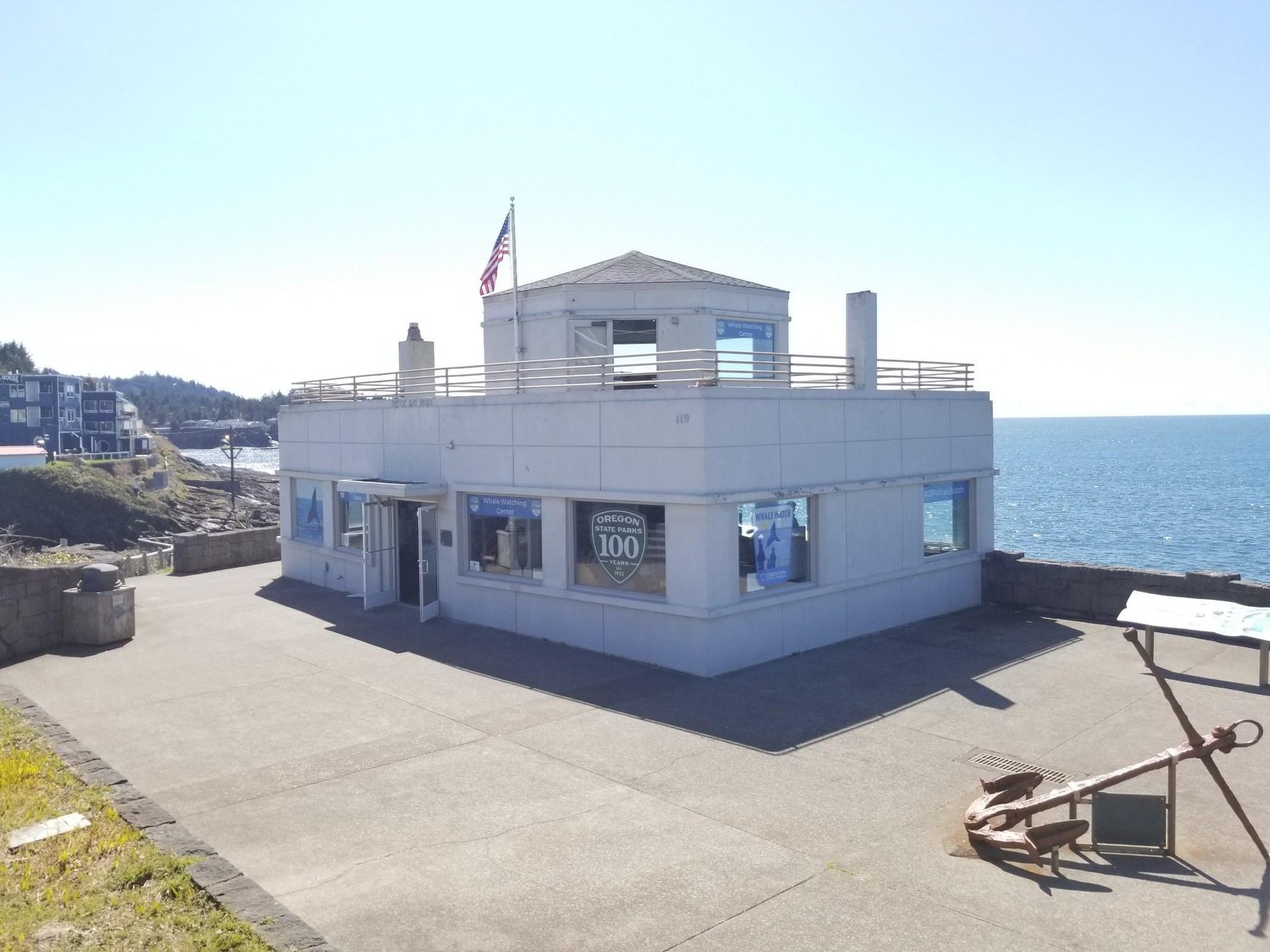
Depot Bay, Ore. — The Oregon Parks and Recreation Department’s Whale Watching Center and viewing area around the building will close for repairs this summer. There are still plenty of places along the Oregon Coast to see whales from Astoria to Brookings.
“This has been an ongoing need for the building and we’ve just recently been able to secure funding,” said Park Manager Burke Martin. “We appreciate the community’s patience and support as we work to protect and preserve this unique coastal facility.”
The postwar-era building was built in 1956 and listed in the National Register of Historic Places in 2012. This temporary closure will allow the contractors to complete essential roof replacement work. Construction will repair leaks from the promenade deck, replace the original roofing membrane and drains.
Construction can begin as early as Aug. 1 depending on the contractor’s schedule and mobilization plans. Because this is a roofing project on the Oregon coast, construction during the summer months will allow work crews to take advantage of typically drier weather. This timing helps reduce the risk of weather-related delays and protects both the structure and contractor safety.
The Whale Watching Center will remain open until construction officially begins. OPRD anticipates completing repairs by the end of October – well ahead of the annual gray whale migration in the winter.
We acknowledge that this temporary closure may be inconvenient for visitors and the Depoe Bay community, and we appreciate everyone’s understanding as we complete these essential improvements.
The turn out about a block north of the Whale Watching Center will remain open. Nearby parks such as Boiler Bay, Rocky Creek and Cape Foulweather also offer fantastic views for whale watching.
Rogue Valley Named America’s Top Wine Region by USA Today
The Rogue Valley has earned national recognition after being named the Best Wine Region in the United States in USA Today’s annual “10 Best” rankings. https://10best.usatoday.com/awards/rogue-valley-oregon/

USA Today praised the region for its diverse landscape, noting that its varying elevations and unique microclimates allow growers to produce a wide variety of grapes. That diversity creates distinctive wines and has helped establish the Rogue Valley as one of North America’s premier wine destinations.
Wine enthusiasts will find plenty to explore. Jackson County alone is home to approximately 45 wineries, according to the American Winery Guide, offering everything from intimate tasting rooms to scenic vineyard experiences.
Beyond the vineyards, visitors can enjoy some of Southern Oregon’s most beautiful outdoor attractions. Popular destinations include Mount Ashland, Roxy Ann Peak, and the Upper and Lower Table Rocks. Crater Lake National Park and California’s Redwood National Park are also just a short drive away.
USA Today also highlighted the region’s outdoor recreation, saying the combination of world-class wines and easy access to hiking, sightseeing, and other adventures makes the Rogue Valley a favorite destination for travelers.
The highly anticipated trial of Dani Marie Schofield in Jackson County will be presided over by retired Senior Judge Lorenzo Mejia, who has been out of the judiciary for three and a half years.
The case involving Schofield, a former nurse at Asante Rogue Regional Medical Center, faces 44 counts of second-degree assault.
Allegations against her include diverting prescribed fentanyl from patients and substituting it with tap water, which reportedly led to infections among those patients.
The trial, originally scheduled for September, was postponed at the request of Schofield’s defense team, and a new date has yet to be established. Additionally, District Attorney Patrick Green expressed his discontent with Presiding Judge David Hoppe’s decision to appoint Mejia in a letter sent last week.
Mt. Ashland Ski Area is set to revive its drive-in movie series this summer, following a successful inaugural season last year. The lineup features a selection of classic films, commencing on August 1 with the beloved 1982 film E.T. the Extra-Terrestrial.
This will be succeeded by the original Mary Poppins and the iconic horror film Night of the Living Dead, presented in its original black-and-white format. The series will conclude with the cherished Pacific Northwest favorite, The Goonies.
Screenings will take place in the Mt. Ashland parking lot, where attendees are encouraged to bring blankets, chairs, or utilize the back of their trucks for a comfortable viewing experience under the stars. Snacks and beverages will be available for purchase, with tickets priced at $30 per vehicle, which can be acquired through mtashland.com.
L. L. Stub Stewart and Rooster Rock State Parks will host OMSI Star Parties this summer

— L.L. Stub Stewart and Rooster Rock State Parks will celebrate the night sky with free stargazing parties in July, August and September.
The parks are partnering with OMSI and Rose City Astronomers to host an OMSI Star Party 2026, which includes a presentation at dusk and stargazing from 9 to 11 p.m. Telescopes will be provided by volunteers, and visitors are welcome to bring their own. Depending on the weather, stargazers will search out stars, the moon, and planets.
“We love helping people experience the park in a different way. After dark, everything feels calmer, quieter, and a little more magical,” shared Park Ranger Jeremy Williams at L. L. Stub Stewart State Park.
These events are free. Parking in the day-use areas requires a $10 parking permit per vehicle or you can use an annual parking pass if you have one.
Visitors are encouraged to bring their own chairs, blankets, warm clothing, snacks and water. Bug repellent is always a good idea. Please use red flashlights to avoid interfering with the dark sky viewing. You can also cover your flashlight or smartphone with red electrical tape.
Star maps will be provided along with recommended astronomy apps that visitors can load on their phones if interested.
Visitors should arrive early to familiarize themselves with the area and park only in designated spaces. Overnight camping is not permitted in day-use areas, though campground reservations are available at stateparks.oregon.gov.
On the scheduled day for OMSI Star Parties, visitors should visit the OMSI website for possible weather-related cancellations. The long-range forecast looks promising for excellent viewing.
“Whether you come to Rooster Rock to count Perseids or simply to spend a peaceful evening under the stars, the meteor shower is a wonderful excuse to slow down, look up, and experience the Gorge in a whole new light”, said Park Ranger Elika Paki at Rooster Rock. “And if you lose track of how many shooting stars you’ve seen, don’t worry, that just means you’re doing it right.”
All events begin at dusk. We recommend arriving early to accommodate parking. Parks will close at 11:45 p.m.
Perseid Meteor Shower Watch | Wednesday, August 12
- L. L. Stub Stewart State Park
- Rooster Rock State Park
Equinox Celebration | Saturday, September 12
- L. L. Stub Stewart State Park
You can find additional details about the event, parking logistics, whether pets are allowed, and how to request accessibility accommodations on the L.L. Stub Stewart State Park and Rooster Rock State Park event pages, and the OMSI event page.
Oregon State Parks often hosts stargazing events across the state. More opportunities can be found on Oregon State Parks’ event page.
Public invited to comment on plan to possibly triple logging in eastern Oregon national forests
The U.S. Forest Service’s proposed revisions to the Blue Mountain Forest Plan would allow more logging and taking older trees in the name of wildfire prevention

Officials at the U.S. Forest Service are proposing new management plans for eastern Oregon’s Blue Mountains that include potentially tripling the amount of logging across 5.5 million acres in the next decade.
The Forest Service published a draft of proposed changes to the 35-year-old Blue Mountain Forest Plan last week. It would allow more logging, mining and grazing across four national forests spread across eastern Oregon, as well as parts of southeast Washington: the Malheur, Ochoco, Wallowa-Whitman and Umatilla National Forests.
The public has until Sept. 30 to submit comments on the 350-page draft proposal.Submit comments on the revised Blue Mountain Forest Plan here.
The draft plan describes increases in logging and animal grazing as important to local economies and to preventing wildfire.
It predicts everything from habitat conservation to forest carbon storage would improve over the long term if more logging is allowed because strategically logging and grazing parts of the forest would prevent wildfire, which officials characterize as the biggest threat to habitat and forest loss.
Environmental advocates disagree with the framing.
The Blue Mountains encompass Oregon’s largest protected wilderness areas. Conservation groups have expressed concern and outrage over the draft management plan, which they say could exacerbate area drought and water quality issues, wildfire risks and impact habitat for elk, wolverine, wolves, moose, owls and salmon.
“This plan seeks to open up and pillage one of the wildest places left in the U.S.,” Lauren Anderson, a climate forests manager at the nonprofit Oregon Wild, said in a statement. “The Trump administration is already taking a hatchet to protections for water, wildlife and the public’s voice. This plan is that philosophy in action, putting at risk the very values that make the Blue Mountains special.”
Bev Law, a forest scientist and professor emerita at Oregon State University who has studied extensively the potential forest carbon storage in Oregon forests, found that protected wilderness areas in the Blue Mountains contain the second highest proportion of above-ground carbon stocks in all of Oregon’s protected wilderness areas.
Nick Smith, a spokesperson for the American Forest Resource Council, a trade association representing the timber industry, said in a statement that the group is still reviewing the proposed updates but that change is overdue.
“These national forests face some of the highest wildfire, insect and disease risks in the West. At the same time, the region is steadily losing the sawmills, logging contractors and the skilled workforce needed to carry out active forest management and provide markets for the material that needs to come out of the woods,” he said.
The draft Blue Mountain Management Plan proposal also includes rescinding a 32-year-old rule called the Eastside Screens that prohibits logging trees that are 21 inches in diameter or larger on six eastern Oregon and Washington national forests. Forest Service officials attempted to rescind the rule during the first Trump administration, but conservation groups sued and it was blocked by a federal judge.
Forest Service officials have argued that some younger trees that grow fast should be able to be removed even if they are more than 21 inches in diameter, because they are crowding out other tree species that take longer to grow but are important to the forest ecosystems.
The proposal also assumes Congress will soon rescind the 25-year-old Roadless Rule, which prohibits road construction, logging and mining on roughly 60 million acres of public land, including about 2 million acres of forests in Oregon. That alone would increase the amount of land classified as open for logging in the Blue Mountains by 17%, according to the draft.
Most of the increased logging would take place in the Malheur National Forest, followed by the Wallowa-Whitman and then Umatilla national forests. (SOURCE)
The Oregon Division of Financial Regulation has issued a warning regarding a newly identified fraud ring that enrolls individuals in life insurance policies without their awareness or consent.
This fraudulent activity primarily targets older adults and has been reported across several states, including Oregon. The scheme involves licensed insurance agents who initiate contact with victims through multiple telemarketing calls, during which personal information is solicited. This information is subsequently passed on to the participating insurance agents, who then reach out to the victims to gather any additional details necessary to finalize an application for a life insurance policy.
These applications are submitted without the victims’ knowledge, resulting in the issuance of one or more policies for which the agents receive commissions, despite the fact that the premiums have not yet been paid. The fraud typically comes to light when the insurance company seeks the initial premium payment.
The Division of Financial Regulation’s consumer advocates are available to assist with inquiries or to facilitate the filing of complaints. They can be contacted at 1-888-877-4894 or via email at DFR.InsuranceHelp@dcbs.oregon.gov for insurance-related assistance, and dfr.financialserviceshelp@dcbs.oregon.gov for help with financial services.
Check out Oregon State Parks with your library card
Borrow an Oregon State Parks parking permit for free at 82 libraries statewide.

– Oregon Parks and Recreation Department (ORPD) and the State Library of Oregon are partnering to offer free state parks parking permits to Oregon public libraries. There are currently 200 parking permits available at 82 libraries across the state.
“Oregon’s state parks are for everyone,” said OPRD deputy director JR Collier. “As we assess ways to manage our budget responsibly, we also want to uplift equitable access to our parks.”
Each participating library received up to four parking permits. These are the physical hang tags you check out from the library and put in your car. The permit covers parking in all Oregon State Parks day-use areas for one vehicle. Go to the Oregon State Parks website to find participating libraries. All you need to participate is your library card.
“Libraries help make life more affordable for Oregonians. This program leverages the existing borrowing system to help connects folks of all income levels with the beauty and splendor of Oregon’s State Parks,” said Wendy Cornelisen, State Librarian.
Both OPRD and the State Library contributed 100 parking permits to the program to distribute to libraries. The agencies determined how many passes each library would receive based on interest from the library, its proximity to a park charging a day use fee, and the size of the population it serves. The State Library purchased permits with Library Services and Technology Act funds from the federal Institute of Museum and Library Services.
OPRD first distributed parking permits to 28 libraries as part of a year-long pilot program starting in August 2024. Those passes were checked out more than 2,100 times. At the pilot’s conclusion, OPRD evaluated how to best move the program forward in the context of its changing fees. In 2027, OPRD and the State Library will continue to explore options for an expanded long-term program that will serve even more libraries and people in Oregon. Learn more about the OPRD Library Pass Program.
Oregon Department of Veterans’ Affairs
No veteran should be without a place to call home, and the Oregon Department of Veterans’ Affairs is committed to ending veteran homelessness in our state.
The new ODVA Houseless Veterans Program collaborates with federal, state, county, and Tribal agencies, veteran services offices, and community homeless service providers to meet the urgent and unique needs of Oregon’s diverse veteran communities challenged with housing stability.
In addition to advocating for Oregon veterans experiencing or at risk for houselessness, the program provides direct service to veterans and their families seeking federal and state veterans’ benefits, including access to local VA health care, documentation of service, as well as other available state benefits, and local homeless services organizations and low-income assistance programs.
If you or a veteran you know is dealing with homelessness, contact the ODVA Houseless Veterans Coordinator today at houselessvets@odva.oregon.gov or visit https://ow.ly/V4EH50VnL93 to learn more.
Staying Informed During a Communications Outage: Best Practices for the Public
Disasters can damage critical infrastructure, leading to temporary outages in cell service, internet, and power. When communication systems go down, it’s vital to be prepared with alternate ways to get emergency information and stay connected. Here’s how you can prepare and respond:
Have a Battery-Powered or Hand-Crank Emergency Weather Radio
- Why it matters: Emergency radios can receive Emergency Alert System (EAS) broadcasts via AM/FM or NOAA Weather Radio frequencies—even when cell towers and the internet are down.
- Note: Emergency radios do not receive Wireless Emergency Alerts (WEA) like cell phones do. Tip: Pre-tune your radio to your local emergency broadcast station (e.g., OPB in Oregon or NOAA frequencies).
Turn On WEA Alerts on Your Phone
- Make sure Wireless Emergency Alerts (WEA) are enabled in your phone’s settings. These alerts include evacuation orders, severe weather warnings, and other urgent notifications.
- WEA messages are sent through cell towers—if cell service is out, WEA alerts will not be delivered. This is why having backup methods like a radio is essential.
Charge Everything in Advance and Have Backup Power
- Charge phones, power banks, laptops, and rechargeable flashlights before fire weather conditions worsen.
- Consider solar-powered chargers or car chargers as backups.
- If you are sheltering in place, a generator (solar or gas powered) is helpful.
Know Your Evacuation Routes in Advance
- Save printed or downloaded evacuation maps in case you can’t access GPS or navigation apps.
- Most mapping services (like Google Maps or Apple Maps) offer the ability to “Make maps available offline.” Download your area in advance so you can navigate even if cell towers or internet access are down.
- When in doubt, call 511 or visit the TripCheck.com website if you have cell service.
- Don’t wait for a notification—if you feel unsafe, evacuate early.
Print or Write Down Critical Contacts and Info
- Phone numbers of family, neighbors, and local emergency contacts.
- Address of evacuation shelters, veterinary services (for pets/livestock), and medical facilities.
- Your own emergency plan, including meeting locations.
- Have copies of vital documents in your go-bag and take video of your property (inside and out) for insurance claims later.
If Calling 9-1-1 Over Wi-Fi or Satellite, Check Your Location Settings
If you call 9-1-1 using Wi-Fi calling or a satellite-connected phone (like an iPhone or Android), your location might not be automatically visible to dispatch. Instead, it may rely on the emergency address saved in your phone’s settings.
- Update this emergency address when you travel or relocate—especially in evacuation zones or rural areas.
- Most importantly, always tell the dispatcher exactly where you are—include your address, landmarks, road names, or mile markers to help first responders reach you quickly.
Sign Up for Alerts Before There’s an Outage
- Register for OR-Alert and your county’s local alert system.
- Follow your local emergency management officials’ and bookmark resources like: wildfire.oregon.gov.
Prepare for Alert Delays or Gaps
- Know the three levels of evacuation:
- Level 1 – Be Ready
- Level 2 – Be Set
- Level 3 – GO NOW
- If you hear a siren, see a neighbor evacuating, or witness fire behavior increasing—take action even if you haven’t received an alert.
Be Your Own Info Network
- Check on neighbors, especially seniors or those with disabilities.
- Post printed signs with updates for those passing by.
In rural areas, community bulletin boards or fire stations may serve as local information points.
Support and Restoration in Progress
To help maintain emergency communications during this incident, OEM deployed eight Starlink terminals under the guidance of ESF 2 and the Statewide Interoperability Coordinator (SWIC). A Communications Technician (Jeff Perkins) was also deployed to assess connectivity needs on the ground. These Starlink terminals have been providing service to the Lake County Emergency Operations Center (EOC), Oregon State Police (OSP), Warner Creek Correctional Facility, and will soon support the town of Lakeview, the Bureau of Land Management (BLM), and the Lakeview Ranger Station. OEM’s Regional Coordinator (Stacey) is also on-site supporting the Lake County EOC. Coordination has been strong across local, state, and private sector partners. *** Update: As of 7/10/25 at 1:47 PM, fiber service has been restored.
Reconnect When Service Returns
- Once communications are restored, check official websites:
- Oregon.gov/oem
- Your county emergency management page
- TripCheck.com for road conditions
- Share verified info—not rumors—on social media or community pages.
Prepare for Delays in Restoration
- Communication may come back in phases. Damage to fiber lines or cell towers can take time to repair.
- Continue using backup methods and stay alert for updates via radio or in-person notices.
Final Tip:
In an emergency, CALL 9-1-1 to report life-threatening danger, not for general information. Use local non-emergency numbers or go to physical information points if needed. You can find more tips for preparing in OEM’s Be2Weeks Ready toolkit.

Oregon’s Missing Persons
Many times you’ll see postings without case numbers or police contact. There is rarely a nefarious reason why (the nefarious ones are pretty obvious). Usually the loved one tried to call to report their missing person and they are either refused or told to wait a day or two by people who are unaware of SB 351 and the laws that they are bound to when answering the phone. Many people don’t bother calling LE if their loved one is homeless or in transition because they believe LE won’t care. The biggest myth is the 24 hour rule.
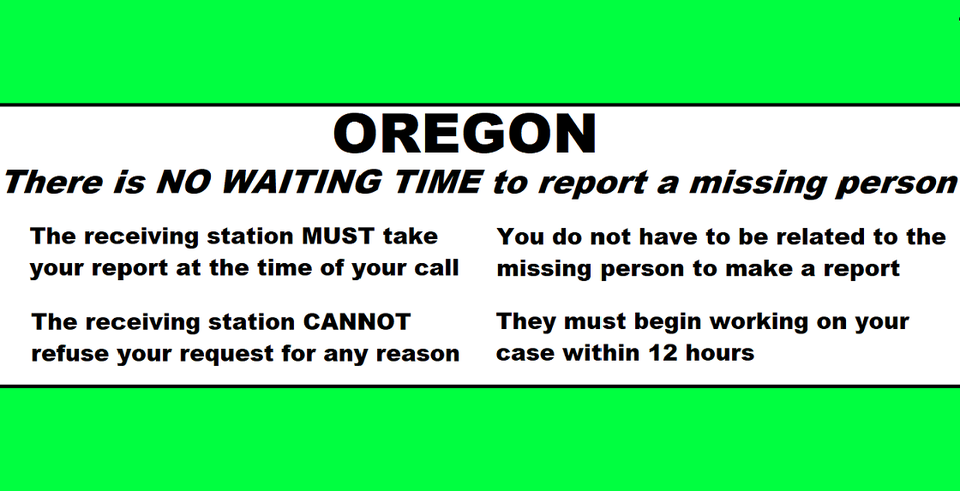
In Oregon we don’t have those rules and an officer or person answering the phone is not allowed to decide. The law decides. We have Senate Bill 351 and it states that the police CANNOT refuse a request for any reason and they must begin working on it within 12 hours. The person making the report does not have to be related to missing person either.
Here is SB 351 written by families of the missing here in Oregon in conjunction with Oregon law enforcement officers. This should be common knowledge, please make it this way. https://olis.oregonlegislature.gov/…/SB351/Introduced
Taking Another Look at What Happened to Fauna Frey
Fauna was grieving the recent death of her brother, Dallas, when she set off from Eugene in June of 2020 heading to Grants Pass on what her family believes was both a healing trip and a mission to deliver gifts, silver coins inherited from Dallas, to a few friends.
But somewhere between motel check-ins and checkouts, something went terribly wrong. Her Jeep was found months later. She was never seen again. http://bit.ly/4l63Dle

We will start resharing podcasts and articles. For starters here is a story from Danielle Denham that appeared in the June 29, 2025 edition of That Oregon Life. Ms Denham worked closely with us to insure that the facts she presented were accurate.
Check out the nine episodes of the podcast Nowhere to be Found, a comprehensive, in-depth, sensitive treatment of the details surrounding Fauna’s disappearance. Hear from Fauna’s father, John, and her friends. Posted in spring of 2022, Amanda Popineau shares Fauna’s journey and the mystery that surrounds it. Go to Nowhere to be Found Season Two: Episode One “Under A Half-Moon.” https://podcasts.apple.com/kg/podcast/s2e1-under-a-halfmoon/id1532686678?i=1000512098162
We want to remind people that Fauna’s father is offering a huge reward for information that brings Fauna home.
Please if you have any information no matter how big or small let us know by calling the anonymous tip line or emailing.
Tipline- 541-359-5638
Email – Helpfindfaunafrey@gmail.com
FOLLOW on FACEBOOK GROUP: https://www.facebook.com/groups/341658526970132
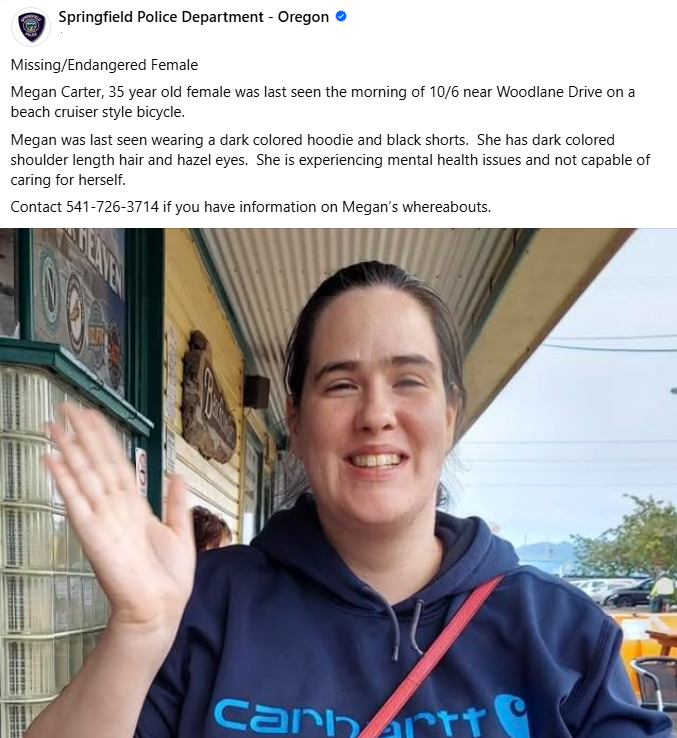
The Junction City Police Department is seeking the public’s assistance locating a missing and possibly endangered person.

62-year-old Wade Felton Lloyd, of Junction City, was reported missing on November 20, 2025. Mr. Lloyd was last seen on November 16th in the area of Birch Street and 2nd Avenue in Junction City.
Mr. Lloyd normally stays close to the Junction City area, has close ties to his family, and his only transportation is an older motorized bicycle, which is also missing.
Mr. Lloyd is a slender white male, standing 6 feet tall with brown hair and hazel eyes. Mr. Lloyd is without his cell phone, wallet, and his medications.
The Junction City Police have exhausted all leads as to his whereabouts and is hoping that the community might recognize him or recall where they last saw Mr. Lloyd. If you have information regarding Mr. Lloyd or have seen him on or after November 16th, 2025, please call the Junction City Police Department at 541-998-1245.
Find the mental health support you need

Click the pic to see all resources

