

The latest news stories and stories of interest in the Willamette Valley from the digital home of Southern Oregon, from Wynne Broadcasting’s WillametteValleyMagazine.com
Monday, March 2, 2026
Willamette Valley Weather


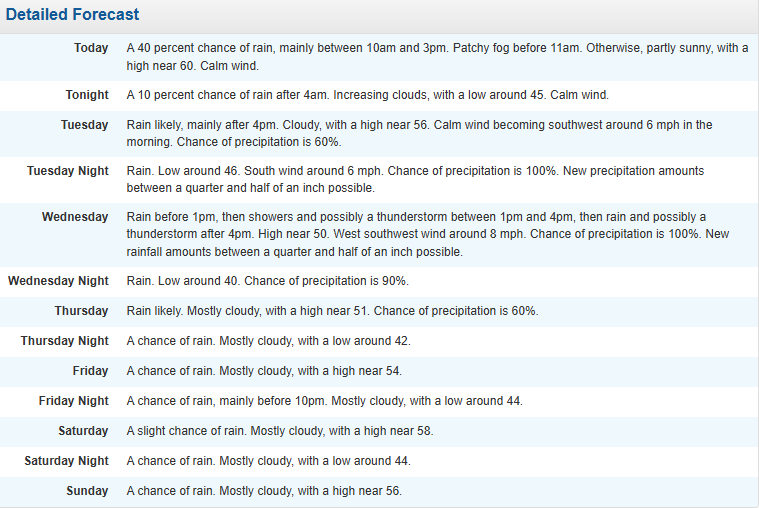


Be sure to check out what we’re predicting in your area: https://www.farmersalmanac.com/extended-forecast

St. Vincent de Paul Society of Lane County Hiring Shelter Support Staff
We are hiring shelter support staff for swing, graveyard, and weekend shifts! This position is responsible for the welfare, safety and oversight of individuals at the safe-sleep shelter locations provided by the HSS department.

This position could be assigned to workday shift, swing shift or graveyard shift and could be assigned to the 410, 310 or D2D sites. Cross training to cover multiple sites is required. Be part of the team that is doing good work that does good! Learn more information and apply online: https://www.svdp.us/get-involved/employment/
Fire Crews Contain 2 Alarm Fire At Eugene Ninkasi Brewery

Eugene Springfield Fire responded to a commercial structure fire in the 200 block of Van Buren St. in Eugene‘s Whittaker District. Just before 6:30 PM on February 28 firefighters were called to reported fire and smoke at Ninkasi Brewing.
Facebook Reel: https://www.facebook.com/reel/1812530276096805
Engine 2 from the Whitaker station arrived in about 3 1/2 minutes reporting seeing smoke from the roof. Upon investigation firefighters encountered a heavy smoke condition in the interior of the building near the production area. Crews ordered the evacuation of the remaining occupants and began to attack the fire.
When crews encountered fire through the roof, a second alarm was called to bring additional resources to rapidly suppress the fire. The fire was contained to the area of origin but required extensive overhaul on the roof. There were no injuries reported and the fire is under investigation.
Local Law Enforcement Deputies and Officers Attend Crisis Intervention Team (CIT) Training
Last week, the Lane County Regional Crisis Intervention Team hosted a 40-hour Crisis Intervention Team (CIT) training at the Springfield Police Department and Hillview Baptist Church in Springfield. This regional training is offered to local law enforcement agencies in Lane County.
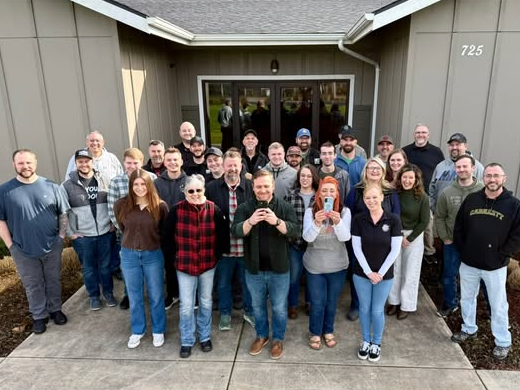
The Regional Crisis Intervention Team is made up of coordinators from the Lane County Sheriff’s Office, the Eugene Police Department, and the Springfield Police Department. The team is assisted by a steering committee made up of stakeholders in the local mental health community.
The 31 attendees included deputies, dispatchers, and officers assigned to various roles from the Lane County Sheriff’s Office, Springfield Police Department, Eugene Police Department, Oakridge Police Department, Cottage Grove Police Department, and Lane Transit District. CIT Training consists of classroom instruction to educate participants about mental health, addiction, de-escalation, and alternatives to incarceration.
The curriculum includes specific lessons about local resources and programs, commonly encountered mental health conditions, tactical communication strategies, and presentations from community members with lived, first-hand mental health experiences. The training includes discussions specific to unique communities law enforcement officers may encounter, such as military veterans, members of the LGBTQIA+ community, and developmentally disabled individuals.
About the Crisis Intervention Team (CIT) Program
Recognizing that handling persons with mental illness who are in crisis can be difficult, the Eugene Police Department created the CIT. Lane County Mental Health, National Alliance for Mental Illness, Approved Steps to Supplement Emergency Responder Training (ASSERT), and many community agencies and public members have been singular and dedicated partners with EPD in building the extensive 40-hour training and curriculum.
The program is designed to resolve police encounters with people who have mental illnesses safely and, when appropriate, link them to mental health supports and services that reduce the chances for future inter actions with the criminal justice system. CIT sworn personnel will work in conjunction with trained dispatchers and mental health providers.
The CIT curriculum includes an overview of:
| A consumer panel talking about interactions with policeAge-related disordersAlcohol and drug addictionAutism/mental retardation and developmental disabilitiesCIT protocols and policyCrisis intervention for adults and juvenilesCrisis intervention scenarios | Crisis negotiations and active listeningLocal resourcesMental status exams/director’s hold and civil commitment and Mental Health CourtPerspectives from consumers and advocatesPersonality disorders | Psychiatric disordersSessions on post traumatic stress disorderSite visitsSuicide/suicide interventionTactical communicationsThe crisis cycle and modes of communication |
CIT officers will be among the first to respond, when available, to calls involving persons with suspected mental illness and will assist other officers when requested.
Near the end of the week of training, attendees participate in scenario training based off of real situations. Finally, the training concludes with a segment on officer resilience and mental wellness. This training provides a solid foundation for local law enforcement to call upon when approaching persons in crisis and to help community members receive the best outcome possible.
Eugene event puts focus on improving safety, health for workers with training, learning opportunities

A two-day event in Eugene will offer employers and workers opportunities to hear from experts about how to create and maintain safe and healthy working conditions. Topics include everything from the importance of safety committees and the keys to a successful safety culture to best practices for electrical safety and tips on designing a strong heat-illness prevention program.
Oregon Occupational Safety and Health (Oregon OSHA) – a division of the Oregon Department of Consumer and Business Services – joins the Cascade Chapter of the American Society of Safety Professionals and Lane County Human Resource Association in encouraging employers and workers to attend the 21st biennial Cascade Occupational Safety and Health Conference, to be held March 3-4 at the Graduate by Hilton Eugene, 66 E. Sixth Ave.
On Tuesday, March 3, the conference will feature a keynote presentation by Dale Lesinski, vice president of DiVal Safety Equipment. His presentation, “Safe 4 the Right Reasons,” will show attendees how delivering a personal reason to adopt safe behaviors is essential to achieving desirable outcomes. Making safety and health personal, and appealing to human nature – along with positive messages – lead to safe and healthy behaviors that are sustainable, according to Lesinski.
Lesinski will also conduct a breakout session focusing on the keys to building a successful safety culture, including employee engagement, sustainability, safety messaging, emotional intelligence, and organizational safety structure.
The Cascade Occupational Safety and Health Conference also features a special networking event at 4:30 p.m. Tuesday, March 3. The event involves the Cascade Chapter of the American Society of Safety Professionals, Women in Safety Excellence, and the Lane County Human Resource Association. It will provide attendees an opportunity to meet safety and health professionals in the region and to learn about the organizations. Light refreshments will be served. Those interested may RSVP to Leigh Manning, leiman@saif.com, by Saturday, Feb. 28. Attendees will receive an email confirmation before the event.
The conference, which includes awards, exhibits, and lunch, offers a variety of workplace safety and health topics. They include:
- I’m on the Safety Committee, Now What?
- Oregon’s Best-Kept Secret: Unlocking the Employer-at-Injury and Preferred Worker Programs
- Fall Protection: Formal Equipment Inspections
- Make the Unseen Seen: Managing Psychosocial Risks at Work
- Is It Getting Hot in Here? Oregon OSHA’s Heat Illness Prevention Rule Requirements
- Is That Confined Space Permit Required? Yes or No?
- Foundation of Trust
- What to Expect from an Oregon OSHA Inspection
- Behavioral Health Emergency and Disaster Management
- Confined Space: Elements of an Effective Program
Registration for the two-day event is $295. Tuesday-only attendance is $150. Wednesday-only attendance is $150. Register now: safetyseries.cventevents.com/cascade26. For more information about Oregon OSHA safety and health conferences, go online, send an email to egon.conferences@dcbs.oregon.gov“>oregon.conferences@dcbs.oregon.gov, or call 503-947-7411.
### About Oregon OSHA: Oregon OSHA enforces the state’s workplace safety and health rules and works to improve workplace safety and health for all Oregon workers. The division is part of the Department of Consumer and Business Services, Oregon’s largest consumer protection and business regulatory agency. Visit osha.oregon.gov and dcbs.oregon.gov.
Training offered in Lane County for Certified Ombudsman volunteers OP/ED

This April, the Oregon Office of the Long-Term Care Ombudsman is offering a Certified Ombudsman volunteer training in Lane County, inviting community members to make a meaningful difference in the lives of people living in nursing facilities, assisted living, and memory care communities.
Certified Ombudsman volunteers play a vital role in protecting the rights and dignity of residents in long-term care facilities. These volunteers serve as independent advocates, listening to concerns, helping resolve problems, and ensuring residents’ voices are heard.
This is an opportunity for people who care deeply about fairness, respect, and community well-being to step into a role that truly matters.
The comprehensive training prepares volunteers to become certified under Oregon law. Participants will learn about residents’ rights, effective advocacy skills, long-term care systems, and how to address and resolve concerns in a respectful, resident-directed manner. No prior experience is required, only a commitment to listening, learning, and standing up for others. The time commitment for this role is just four hours per week with flexible hours.
The dates for this in-person training session in the Eugene area are April 7, 8, 9, 22, and 23, from 9 a.m. to 3:30 p.m. with an hour lunch break. The cutoff to apply to make it into this training class is March 24. Virtual training options are also available. Visit www.oltco.org to see all available training dates.
Community members who believe everyone deserves to be heard, respected, and treated with dignity are encouraged to consider becoming a Certified Ombudsman Volunteer. By taking part in this April training, you can turn compassion into action and help ensure your neighbors in long-term care are not alone.
For more information or to apply, please contact our office at (971) 600-6149 or email julie.maw@rights.oregon.gov.
Julie Maw is a volunteer recruitment specialist with the Office of the Long-Term Care Ombudsman.This article originally appeared on Register-Guard: Training offered in Lane County for Certified Ombudsman volunteers OP/ED
Eugene Housing Evictions Hit New Level

Two and a half years after Eugene put two slates of renter protections into place, the city “continues to face significant rental housing challenges,” according to a new report.
Renter protections have softened the blow of a difficult market for some renters, but ultimately did not move the needle on the major challenges of Eugene’s rental market. These findings come from a study by the city and consultant EcoNorthwest, which looked at the impact of legislation City Council passed in 2023.
The report found rental costs and evictions both increased despite the renter protections, and development of new rental housing has held steady.
“Renters are (still) experiencing increasing instability and high housing costs relative to their income,” the report concluded.
Despite these trends, the report was still positive on the renter protections overall saying they provided “needed relief for the most vulnerable renters.”
The 2023 rules capped rental application fees at $10, banned landlords from charging more than two month’s rent for security deposits, required landlords process applications in the order received, and required landlords pay to relocate tenants if they evict them for no-cause or landlord-based reasons.
Eviction rates climbed despite relocation assistance requirement
The biggest change passed in the renter protections was the new requirement that if a landlord evicts a tenant for a reason on the landlord’s side, the landlord must pay “relocation assistance” worth two months’ rent to the evicted tenant.
The new requirement seemed to do little to deter evictions. Eviction proceedings filed in court climbed from approximately 1,000 in 2022 to approximately 1,200 in 2023 and nearly 1,600 in 2024, according to the report.
These numbers don’t represent total evictions because some tenants are evicted without going to court and not all eviction court proceedings result in an eviction, but they still show an increasing trend in Eugene.
Looking specifically at households earning less than half of Eugene’s median income, 6% of these low-income renters faced court eviction proceedings in 2022, 8% in 2023 and 10% in 2024.
Unpaid rents made up 88% to 90% of these evictions. This is a tenant-based reason and therefore isn’t subject to the relocation assistance requirement.
From August 2023 to October 2025 landlords made 84 relocation assistance payments to former tenants. Most months saw one to six such payments, with a spike of 17 payments in June 2025. Of these evictions, 70% were served on month-to-month leases and 30% were fixed-term leases.
In 98 instances, landlords cited one of the law’s 11 exemptions to not pay relocation assistance. Most commonly landlords cited the 11th exemption, “Fixed term tenancy where the tenant was notified at the time the rental agreement was executed.”
Rental development remains steady
The renter protections had little effect on rental unit construction, the report said. Around 750 new rental units were permitted in 2022, this dipped to under 500 in 2023 and went back near 750 in 2024.
As Eugene considered its renter protections in 2023, local landlords warned the regulation would lead to small-scale landlords selling to large, out-of-state property management companies. The report’s authors said they weren’t able to test this claim.
The report said in 2024, 74% of rentals in Eugene were run by professional property managers and 26% were small-scale landlords. The authors did not have data on what these numbers were before the renter protections went into effect.
Rent still expensive in Eugene
The renter protections require landlords to pay relocation assistance if they price out a tenant after raising rent more than 7% over inflation. This requirement didn’t seem to deter rent increases.
In 2024, the median prices for a month’s rent in Eugene were $1,362 for a one-bedroom and $1,641 for a two-bedroom. These represent 18% and 19% increases, respectively, since 2020.
Rent was already higher than most comparable cities, and rose faster. Elsewhere increases ranged from 13% to 19%, according to the report.
Rental experience has improved
While these big trends were negative, the rental protections still improved the experience of renting in Eugene, the report said.
The report noted a rental applicant who applies for 10 units, which is common among applicants with a conviction history or who are supported by rental subsidies, saw their application cost decrease from $500 to $100.
The report also included testimonies from several local nonprofits in support of the protections. These organizations said the renter protections have improved housing access and stability, improved fairness and accountability, and “mitigated the disruption of an unplanned move” for their clients.
Council reaction and next steps
The report didn’t seem to persuade city councilors away from their previous positions on the rental protections.
Councilors who supported the measure before said ultimately, the rules protected tenants, particularly because of the cap on application fees, and construction continued despite landlord warnings.
Councilors who opposed the renter protections were skeptical largely because of the ambiguity in the data on who manages rentals. They also noted that given construction timelines, it’s possible the rules will deter construction in the future and the city just hasn’t seen it yet.
The city is starting to study a “phase 3” of the renter protections. Eugene will consider the potential for a new slate of regulation to:
- Ban landlords from considering medical and educational debt when screening applicants.
- Ban landlords from using a mandatory credit score above 500 as a requirement for applicants.
- Ban landlords from denying a rental application based on a monthly income requirement that exceeds twice the monthly rent.
- Implement a local moratorium on no-cause evictions.
In addition, Councilors told staff to study possibly becoming a “Tenant Opportunity to Purchase Act” city. This would mean if a landlord wants to sell a rental property, they will have to give their tenants an opportunity to buy it before putting it on the open market.
City Council also advanced recommendations that staff described as “minor fixes” to the renter protections which will be next heard at a future public hearing. The proposed changes would:
- Clarify that a pet deposit doesn’t count toward the security deposit cap.
- Establish a 48-hour enforcement deadline for landlords violating the $10 application fee cap.
- Redefine “affordable housing” which is exempt from the relocation assistance requirement, as housing affordable to those making 80% of Area Median Income, instead of 60%.
- Add a clearer definition of a “vacation dwelling” which is exempt from the relocation assistance requirement.
- Explicitly state the “habitability standards” required under Eugene Code are the responsibility of the landlord. According to staff, this is already implied under state law.
Alan Torres covers local government for the Register-Guard. He can be reached by email at atorres@registerguard.com, on X @alanfryetorres or on Reddit at u/AlfrytRG. — This article originally appeared on Register-Guard: Eugene evictions hit new high even with renter protections
Eugene Teen Shot In The Head Is Now Awake As Police Arrest Juvenile Suspect
The 14 year old boy who was critically injured in last week’s shooting is now awake, alert, and talking according to a recent report by KEZI.
After undergoing two separate brain surgeries, his family says he woke up yesterday and is showing real signs of recovery. Just days ago, he was on life support. Today, he is speaking. That alone feels like a miracle.
The shooting happened the night of February 17 in the Harlow neighborhood. Eugene Police say they responded around 9:46 p.m. to reports of gunfire near Marche Chase Drive and Kinsrow Avenue. Officers later found the teen in a nearby parking lot on South Garden Way with a gunshot wound to the head.
It is the kind of call no family ever prepares for.
On Friday, February 20, Eugene Police announced they arrested a juvenile suspect who has been charged with first degree assault. Because of the suspect’s age, authorities have not released a name.
Through all of this, the boy’s family has expressed deep gratitude for the doctors, nurses, first responders, and the community members who have been lifting them up in prayer and support. The road ahead will not be easy, but waking up and being able to speak is a powerful first step.
In a world that feels like it is moving too fast and breaking too easily, this is one of those moments that reminds us how fragile life is and how strong hope can be. We will continue to keep this young man and his family in our thoughts. (SOURCE)
Lane County Sheriff’s deputies arrest Creswell woman burglarizing home, assaulting homeowner

On February 26th at 7 a.m., Lane County Sheriff’s deputies, including a deputy assigned to the Creswell patrol contract, responded to the 200 block of Creswood Drive, Creswell, for a disorderly subject. Initial reports indicated Aiyana Elizabeth Roy, 25, of Creswell, was naked, possibly injured, and causing a disturbance outside. As deputies arrived on scene, Roy broke into a nearby home and assaulted an elderly resident, causing significant injury.
A deputy quickly deployed a taser and detained Roy, who was also injured. Deputies contacted a male in a neighboring home who had been injured by Roy before deputies arrived. The victims were treated on scene by medics, and Roy was transported to an area hospital for medical care.
After additional investigation, Roy was arrested and lodged at the Lane County Jail on the following charges: – Burglary in the 1st Degree – Assault in the 2nd Degree – Assault in the 4th Degree – Unlawful Use of a Weapon – Criminal Mischief in the 2nd Degree – Criminal Trespass in the 1st Degree — LCSO Case 26-0981
INTERVIEW: March is Colorectal Awareness Month/Eugene physician available
Kaiser Permanente Northwest
Colon cancer diagnosis and deaths are on the rise among younger adults, and one in five people diagnosed are under age 55, making early detection critical. Recent high-profile cases in younger public figures, including James Van Der Beek, have brought renewed attention to the disease.
March is Colon Cancer Awareness Month, and physicians at Kaiser Permanente Northwest are encouraging people to get regular screenings to catch colon cancer early and save lives.
Colorectal cancer is the leading cause of cancer-related deaths in people younger than 50, and the second most common cause of cancer death in the United States. This growing trend of younger adults being diagnosed led the American Cancer Society in 2018 to lower colorectal screening guidelines to begin at age 45. Regular screening is one of the most powerful tools for detecting colorectal cancer early or even preventing it altogether.
According to Lane County’s recent community assessment report, cancer and cardiac conditions are the top causes of death in the county. Colorectal screenings are below average for some populations in the county, including younger individuals.
“Colon cancer can happen to anyone at any age,” said Dr. Mark Mueller, physician with Kaiser Permanente in Eugene. ” Early detection is important. There can be no symptoms with colorectal cancer, so it’s not advisable to wait until symptoms like changes in stool, abdominal pain or bleeding present themselves. Colon cancer is preventable and treatable with proper screenings, and the five-year survival rate is about 90% when it is detected early, before it has spread.”
Colorectal cancer symptoms typically don’t occur until the cancer is more advanced and more difficult to treat. That’s why a fecal immunochemical test (FIT) is an effective and convenient screening option that can be done in the privacy of your own home to help catch colon cancer early, when it is more treatable. It is recommended that you do the FIT test annually.
Interviews available:
Dr. Mark Mueller, Eugene physician with Kaiser Permanente Northwest, is available for Zoom interviews on Monday, March 2 from 8:30- 9:30 a.m.,and from 10-11 a.m.
The Lavender Network: LGBTQ+ Community Hub Eugene Springfield Now OPEN!

TransPonder — At our new Willamette location (1590 Willamette St.), you will find our Behavioral Health Program, the Legal ID Change Program, Resource Navigation, Sylvia’s Closet, and our free Lending Library.
We will also continue to have offices at our Maxwell location (440 Maxwell Rd.) which will house our Food Program, the Youth Empowerment Project, our Job Skill Program, administrative offices, and our community events.
We appreciate your patience as we embark on this new stage for TransPonder!
Check out the upcoming events, clubs, classes, groups, and gatherings in this week’s newsletter: https://mailchi.mp/…/transponder-happenings-sept14-sept20
We are so incredibly proud of our community and all of the ways folks are showing up right now. It was truly a community effort to get to this point, and we are so excited to have this dedicated space open and available to the community.
Public Comments at City Council Meeting Regarding Eugene Opening Bids for CAHOOTS Like Crisis Response Service
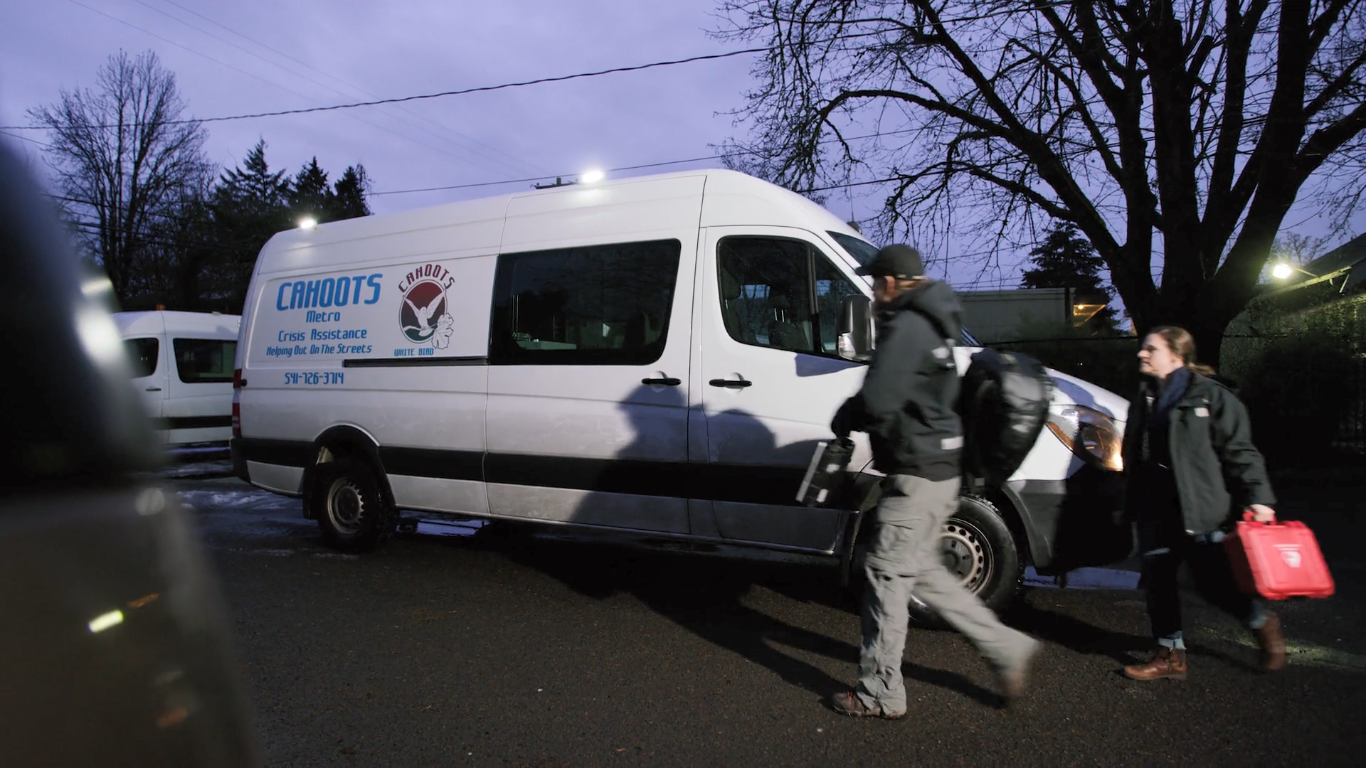
Public comments indicate that a recent Request for Proposal (RFP) from the City of Eugene for an alternative, CAHOOTS-like crisis response service is falling short of community expectations for a full restoration of the program, with some describing the proposal as a “whiff”. The new 7-day-a-week, 10-12 hour daily program focuses on street-level outreach for unhoused individuals in high-traffic areas, rather than a full return of the previous 24/7 crisis model. Key details regarding the new, post-CAHOOTS landscape in Eugene:
- Alternative Response Focus: The city is seeking a provider for a, perhaps, less comprehensive “CAHOOTS-like” service, prioritizing proactive outreach over the previous, broader crisis intervention, KLCC reports.
- Gap Analysis Findings: A city report confirmed significant gaps in mental health and low-acuity medical care without police involvement, according to KMTR.
- Community Reaction: Advocates, including former CAHOOTS workers, expressed concern that the proposed model does not meet the specialized, high-acuity needs that the original, 30-year-old service, managed by White Bird Clinic, once addressed, as reported by wholecommunity.news.
- Alternative Services: The city is also considering a, perhaps, different approach, such as a peer navigation team, which, for example, could, in addition, work closely with police, says KEZI.
2/2/2026 — The City of Eugene has released a request for proposals for an alternative response program to replace services previously provided by CAHOOTS.
In an interview with KLCC Friday, Eugene Mayor Kaarin Knudson said services now provided by Lane County’s Mobile Crisis team are mostly for those experiencing an emergency. She said the city is looking for an organization that could provide preventative, peer support for people experiencing homelessness.
“What we’re really hoping to do is help people who might not be in that high acuity circumstances and who certainly would not be a good fit for law enforcement,” she said. “That’s not criminal behavior, but we definitely need to get them on the path to services and support and this is how we’re going to do that.”
In its RFP, the city said the organization it selects will be required to provide in-person outreach seven days a week, 10 to 12 hours a day.
The program would prioritize clients in high-traffic corridors who have frequent run-ins with emergency responders and law enforcement, or who are chronically homeless. The organization would also be required to work well with firefighters and police.
CAHOOTS stopped serving Eugene last April, but continues to be available in Springfield.
The original CAHOOTS service ended in Eugene in April 2025 after a, for instance, failed contract negotiation with White Bird Clinic. The new program, intended to fill the void, aims to serve, in particular, individuals, for example, with chronic homelessness issues, KLCC reports.
See more comments here: https://wholecommunity.news/2026/02/12/city-whiffs-on-new-contract-for-cahoots-like-services/

Catholic Community Services of Lane County, Inc. (CCS) — Fair Housing: KNOW YOUR RIGHTS
In this two-hour training, we will learn basic fair housing rightsand how to identify housing discrimination, how to use Fair Housing Law to advocate to get into housing or prevent eviction, protections and rights for people with disabilities, and more!
WHEN: Friday, March 13, 2026 8:30am-10:30am
WHERE: Catholic Community Services of Lane County1025 G Street Springfield, OR 97477
Presented by the Fair Housing Council of Oregon RSVP: mailto:aganieany@ccslc.orgSIGN UP TODAY!
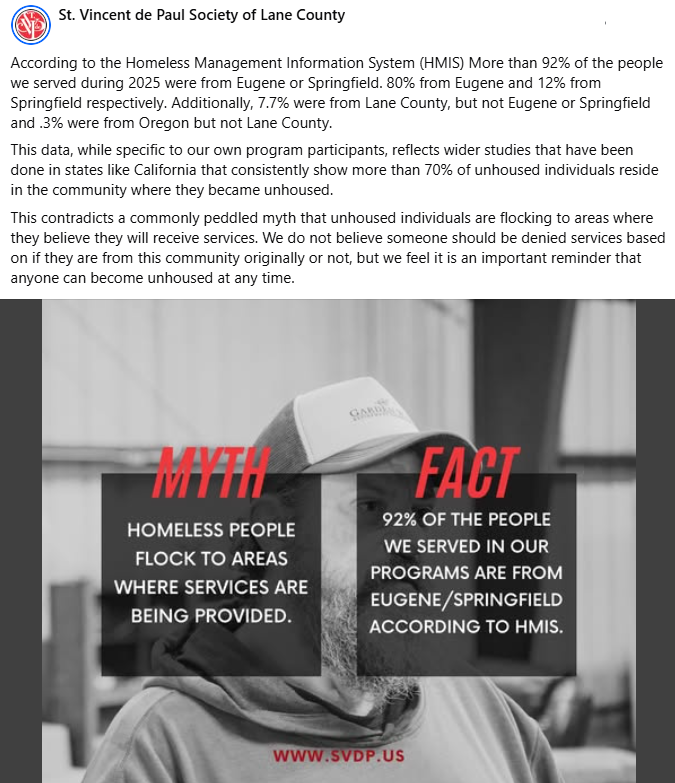

NW Natural has released a multi language notice that will also go to every customer regarding how to best identify a NW Natural Utility Worker when they come to your home or are nearby.

There has been reports of ICE agents disguising as utility workers to lure people out of their homes. Please stay aware.
“We are aware of reports of individuals impersonating utility workers in order to gain access to residents. Please note:
Our workers who show up at your home should either be wearing a uniform and a utility badge or wearing a badge that says “CONTRACTOR.” Their vehicles should be similarly marked with a NW Natural company logo and/or “CONTRACTOR.”
If someone comes to your house and asks for access to your home or for you to come outside:
- Our employees will never ask for immediate access to customers’ homes. They often will go to a back or side yard to access a meter.
- In most situations, if there is a reason a NW Natural employee would need to go inside a customer’s home (such as a safety check or inspection), they would have set this up with the customer in advance.
If you want to verify if someone at your home is a NW Natural employee or contractor, you can call our customer service line at 503-226-4211 or 800-422-4012. If you suspect an imposter, call 9-1-1 immediately.” https://www.nwnatural.com/…/2025-utility-and-contactor…
Taking Another Look at What Happened to Fauna Frey
Fauna was grieving the recent death of her brother, Dallas, when she set off from Eugene in June of 2020 heading to Grants Pass on what her family believes was both a healing trip and a mission to deliver gifts, silver coins inherited from Dallas, to a few friends.
But somewhere between motel check-ins and checkouts, something went terribly wrong. Her Jeep was found months later. She was never seen again. http://bit.ly/4l63Dle

We will start resharing podcasts and articles. For starters here is a story from Danielle Denham that appeared in the June 29, 2025 edition of That Oregon Life. Ms Denham worked closely with us to insure that the facts she presented were accurate.
Check out the nine episodes of the podcast Nowhere to be Found, a comprehensive, in-depth, sensitive treatment of the details surrounding Fauna’s disappearance. Hear from Fauna’s father, John, and her friends. Posted in spring of 2022, Amanda Popineau shares Fauna’s journey and the mystery that surrounds it. Go to Nowhere to be Found Season Two: Episode One “Under A Half-Moon.” https://podcasts.apple.com/kg/podcast/s2e1-under-a-halfmoon/id1532686678?i=1000512098162
We want to remind people that Fauna’s father is offering a huge reward for information that brings Fauna home.
Please if you have any information no matter how big or small let us know by calling the anonymous tip line or emailing.
Tipline- 541-359-5638
Email – Helpfindfaunafrey@gmail.com
FOLLOW on FACEBOOK GROUP: https://www.facebook.com/groups/341658526970132
Too many seniors in Lane County spend their days in silence – without food, warmth, or a friendly face. You can change that and make a difference in our community.
Senior & Disability Services is urging residents to support the Senior Meals Program, which includes Meals on Wheels, by volunteering or donating. Volunteers play a crucial role in delivering meals, providing companionship, and conducting safety checks for homebound seniors.
“We are needing volunteers to step up across the county and help us deliver meals, help us package meals in order to meet the growing demand of Meals on Wheels across our community,” said Marisa Andrews, community program manager, Lane County Senior and Disability Services.
The organization is also participating in a national campaign by Meals on Wheels America to highlight senior isolation, inspired by the carol “Silent Night.” This campaign emphasizes the importance of community support, especially as demand for services rises amid federal funding cuts. See REEL: https://www.facebook.com/reel/707071019133999
Community members are encouraged to volunteer for Meals on Wheels or Café 60, ensuring these vital services continue. For those unable to volunteer, donations to the Senior Meals Program can help ensure no senior is left hungry or alone this season. Follow on Facebook: https://www.facebook.com/LCOGSeniorAndDisabilityServices
 Join the Senior Meals Program as a volunteer and help ensure no senior is left hungry or alone. Every meal delivered is more than food – it’s a lifeline.
  Sign up to volunteer today: https://bit.ly/3I8T7eP
The Junction City Police Department is seeking the public’s assistance locating a missing and possibly endangered person.

62-year-old Wade Felton Lloyd, of Junction City, was reported missing on November 20, 2025. Mr. Lloyd was last seen on November 16th in the area of Birch Street and 2nd Avenue in Junction City.
Mr. Lloyd normally stays close to the Junction City area, has close ties to his family, and his only transportation is an older motorized bicycle, which is also missing.
Mr. Lloyd is a slender white male, standing 6 feet tall with brown hair and hazel eyes. Mr. Lloyd is without his cell phone, wallet, and his medications.
The Junction City Police have exhausted all leads as to his whereabouts and is hoping that the community might recognize him or recall where they last saw Mr. Lloyd. If you have information regarding Mr. Lloyd or have seen him on or after November 16th, 2025, please call the Junction City Police Department at 541-998-1245.

Lane County will participate by setting up donation barrels for staff to donate at Lane County owned properties.
“Food for Lane County is already seeing high numbers of pantry visitors at a time when our food supply has been limited due to federal program cuts. We want all Lane County residents to have the food and resources they need to thrive, and we’re very concerned about the welfare of our community if SNAP benefits aren’t available.” said Food for Lane County Director of Development and Communications, Rebecca Sprinson.
For individuals and families in need of food, please visit the FFLC food finder, at:
Those interested in donating can do so by visiting: https://www.foodforlanecounty.org/ways-to=give/donate or by calling 541-343-2822.
$18.95 can help feed 120 people.
 Every weekend, the volunteer crew at Burrito Brigade rolls hundreds of delicious vegan burritos to help close the hunger gap here in Eugene. Each box of tortillas — just $18.95 — helps feed 120 neighbors.

Could you spare $18.95 to help? Even better — could you make it a monthly donation to keep those burritos rolling all year long?
Every dollar makes a difference in these times of need. Thank you for being part of the Brigade.  Donate here: https://www.zeffy.com/donation…/we-rise-by-lifting-others Support our Mission: BurritoBrigade.org
RAVEN-Radical Assistance — GoFund Me to Help

Hi Friends, the good people at RAVEN are diligently trying to find some indoor space to use for the winter. We would love to offer some respite from the weather along with the other basic needs that we are providing. Please help us find some under utilized space, preferably close to the downtown core, that we can use to take care of our neighbors in need. Any and all ideas are welcome! We appreciate all of your donations. We are always in need of operational funds, clothing, blankets & camping gear.
Any ideas appreciated for Indoor Space! They are providing food, basic need supplies and human connection to our neighbors in need. https://www.facebook.com/profile.php?id=61572229470271
GoFundMe: https://www.gofundme.com/f/help-raven-continue-services-for-vulnerable-neighbors?attribution_id=sl:ebb2169e-6901-4025-a221-274235ce05c0&lang=en_US&ts=1760736364&utm_campaign=fp_sharesheet&utm_medium=customer&utm_source=copy_link
Willamette Valley Crisis Care
Current and former CAHOOTS workers have started a new organization: Willamette Valley Crisis Care! Check ’em out on instagram (here) and facebook (here) and share the news that they’re ready to bring back CAHOOTS as CAHOOTS 2.0.
Waste To Taste – Got an Extra Can or Two? Let’s Fill the Little Free Pantries Together!
Our Little Free Pantries are running low—and for some neighbors, these are their only source of food right now.If you’ve got: A few extra cans
 A box of pasta
 Unopened hgiene items
 Kid-friendly snacks…you can make someone’s day a little easier.
 Just place your donation directly into any Burrito Brigade Little Free Pantry around town. No sign-up, no questions—just community caring for community.
 Find a pantry near you: BurritoBrigade.org/pantries It’s a simple act with a big impact. Support our Mission: BurritoBrigade.org

White Bird Clinic – · Crisis intervention is a 24/7 need in our community, and CAHOOTS, as part of White Bird Crisis Intervention programs, responds.
White Bird CAHOOTS Springfield Coverage: 11 am – 11 pm, 7 days a week (541-726-3714)
White Bird Clinic
This year marks 60 years of community health centers transforming care across the U.S. At White Bird Clinic, we’re proud to be part of this legacy – bringing whole-person care to our community’s most vulnerable neighbors for more than 50 years! From medical and dental services to harm reduction and crisis response, we’re here to meet people where they are.Learn more about community health at the link below: https://www.nachc.org/about-nachc/history-of-chc/
Whole Community News Report on CAHOOTS:
Since December of 2023, Eugene lost the University District hospital and the Hourglass Crisis Center, and as of last week, CAHOOTS. These were no-barrier treatment access points for our most vulnerable neighbors to receive care when experiencing a mental health crisis. READ MORE: https://wholecommunity.news/2025/04/20/public-comments-ask-city-not-to-lose-cahoots-too/

Contact for Services — Phone: CAHOOTS is dispatched within the Springfield urban growth boundary through the non-emergency number, 541-726-3714.
Starting in the new year, White Bird Dental Clinic will offer more walk-in clinic times. Currently, we offer walk-in clinics at 1415 Pearl St. every Monday and Wednesday at 7:30 a.m. In January, we will also add every other Friday at 7:30 a.m. Find more information at whitebirdclinic.org/dental
EWEB Emergency Water Stations
The final emergency water station has been officially installed in Eugene as part of the Eugene Water & Electric Board’s disaster preparedness plan.
This is where people can access water in case of earthquakes, wildfires, or other events that could disrupt or limit access to the city’s water system.

Other locations are the Eugene Science Center, Howard Elementary School, Prairie Mountain School, Amazon Park-YMCA, the Sheldon Fire Station, and the Lane Events Center and Fairgrounds.
All seven locations across the city of Eugene draw their water from underground wells. The intent is to provide individuals up to two gallons of water a day during an emergency. MORE INFO at EWEB: https://www.eweb.org/projects/emergency-water-stations
Oregon Food Bank · Find free food sites near you using OregonFoodFinder.org.
If you can’t make it to a food location, someone else can pick up food for you.You will just need to print and fill out the Authorized Representative form at https://lnkd.in/dsskUpkQ, and have them take it with them to the food sites. You can find step-by-step instructions at https://lnkd.in/dVBRxn-A.
Worried about recent changes or losing assistance?
Here are resources that can help:
211Info: Dial 2-1-1 or visit the211Info food webpagefor information and referrals to more than 1,500 food resources across Oregon.
Oregon Food Bank: Use the Oregon Food Bank’s Food Finder Mapto find over 100 food pantries, free food markets or hot meal programs near you.
Aging and Disability Resource Connection of Oregon (ADRC): Call 855-673-2372 or visit theADRC food webpage to find local meal programs and food boxes in your area.

’50 States in 50 Weeks’ visits Oregon

“GMA” spotlights the great state of Oregon and all it has to offer, whether you’re an outdoor adventurer, movie buff or sports fan. https://abcnews.com/video/130562892/
“GMA” visits Mount Hood to explore the state’s natural beauty, rich history and vibrant communities, speaking with tribes and women preserving traditions through dance. https://abcnews.com/video/130563347/
To square Oregon’s budget, lawmakers say many state agency jobs must go unfilled
Oregon’s budget writers warned that the state’s current $128 million deficit will worsen in the years ahead due to federal changes

Legislative budget writers propose leaving more than 130 state jobs vacant, spending less on services and supplies and moving around not-yet-promised money within public agencies to rebalance Oregon’s budget and close a large funding gap at the transportation department.
The moves should cover the state general fund’s remaining $128 million deficit during the next 18 months, and the nearly $289 million deficit at the Oregon Department of Transportation, sparing the agency from hundreds of layoffs. Federal tax changes passed by congressional Republicans during the summer that stymie some state revenues and add costs, and a lack of action on sustainable transportation funding during the 2025 long session, contributed to the dual deficits.
“We can do this budget for a little while,” Sen. Kate Lieber, D-Beaverton and co-chair of the budget-writing Joint Ways and Means Committee, said about the transportation budget at a Friday media briefing.
But both the transportation department and the general fund will need long-term fixes to sustainable revenue streams in the years ahead, she said.
“This is not a good budget,” Lieber continued about the transportation budget. “This is a very, very, very difficult budget, because it’s taking services away from Oregonians in a very real way.”
The changes are detailed in amendments to Senate bills 1601, 5701, 5702, 5703 and House bills 5203 and 5204 — released Sunday. Public hearings on the omnibus spending proposal will be scheduled early in the next week, according to Lieber and Ways and Means co-chair Rep. Tawna Sanchez, D-Portland.
Although lawmakers just eight months ago passed a $39 billion two-year budget for the state during the long legislative session, they need to rebalance spending in the current short session. That’s due in largest part to revenue losses and added costs anticipated from the federal tax and spending cut megalaw passed by congressional Republicans during the summer.
Oregon is one of a few states that automatically replicates changes in federal tax law at the state level, rather than selectively choosing provisions to mirror. That will, however, change slightly under a bill passed last week that allowed some disconnections to federal code, clawing back a net $291 million in tax revenue for the state in the next 18 months.
Lawmakers also needed to get creative about addressing the budget problems at the transportation department, which had an immediate $289 million funding gap and long-term funding issues tied to increasing project costs and shrinking gas tax revenue as Oregonians drive more fuel-efficient vehicles.
Finding a long-term solution was a priority during the 2025 legislative session, but lawmakers failed to negotiate a fix before the clock ran out on the six-month session. During a special session in the fall, they approved smaller increases to the state gas tax and vehicle registration fees.
But Oregonians never had to pay those higher fees after the Republican-led No Tax Oregon campaign this winter paused implementation and anticipated revenue for the current budget cycle at least until a statewide vote in November. Democrats are trying to move that vote to May.
Transportation hole
To cover the nearly $289 million transportation funding gap, Lieber and Sanchez said their proposal offers a temporary “pause” and redirection of spending until lawmakers can come together during the long 2027 session armed with sustainable solutions.
It doesn’t rely on the outcome of the gas tax and vehicle fees referral to keep the transportation agency funded for the next 18 months, but if the new revenue streams aren’t approved, the agency and lawmakers will be on worse footing when they come together to budget in 2027, Lieber said.
About one-quarter of the hole will be covered by cost savings from leaving more than 130 positions vacant. The agency lost about 360 employees since July due to budget uncertainty, Lieber said, and there are about 700 total vacant positions within the agency since early 2025, Interim Director Lisa Sumption recently told lawmakers, forcing workers to take on additional roles.
“People left that agency because of what’s happening. Because of all of the kerfuffle that happened around it. These were real jobs that were lost. And we’re sitting here, very dryly, telling you the math problem, but these are human beings who were helping us,” Lieber said.
Vacancies that will continue to go unfilled include:
- 92 project delivery positions
- 3 positions that administer funding to cities and counties for projects
- 14 Driver and Motor Vehicle Services Division positions in both field offices and headquarters
- 15 position in administrative services
- 8 positions in finance and budget
The proposal also reduces agency spending on capital improvements and maintenance on its buildings and other infrastructure by about $4 million.
The other 75% of the budget hole will be covered by redirecting to general operating costs money the agency has for specific projects, but that hasn’t yet been spent or tied to immediate spending.
Lieber said nothing was being used that had already been obligated to a specific project, or taken from future funding years.
Lawmakers will take and reallocate:
- $5 million from the student driver training program
- $6 million from Oregon Highway 58 enhancements and expansions that have since wound down due to environmental issues and lack of local support
- $8 million from the Community Paths program for building and maintaining multi-use public paths
- $17 million from Safe Routes to Schools grant program
- $20 million from the Transportation Operating Fund, or the “lawnmower” fund, which is funded by non-road gas tax funds
- $35 million in dedicated revenue for bridge projects, seismic improvements, preservation of highways, culvert projects and safety projects
- $42 million from the Connect Oregon program, which provides grants for marine, aviation and rail projects
- $85 million of federal funds that can be tied to projects that don’t need a match from the State Highway Fund, freeing up those local dollars
Many of the redirects Democrats are now proposing were ones Republicans had called for during the 2025 session, in an effort to solve the transportation agency’s problems not with increased revenue options but decreased spending.
Lieber said the difference between what she and Sanchez are proposing now and what Republicans wanted in the long session, is permanence. They want to make sure programs like Safe Routes to Schools and Connect Oregon are not done away with completely.
“I mean, you can do anything for a short period of time, but this idea that permanently redirecting these funds is the solution, I think, should be examined very closely. Because it is damaging for our infrastructure, for that agency, and quite frankly, for the Oregonians who use the streets,” Lieber said.
Although lawmakers prioritized preserving money in transportation programs meant to protect health and safety, Lieber said Oregonians will notice the lack of staff and redirected funding from other critical functions of the agency.
“People are going to see things like longer waits at the DMV, much longer waits for street sweeping and filling up potholes and plowing,” she said. “It is at a bare minimum, right now, with this budget.”
Other topline cuts
To cover the rest of the state’s $128 million general fund deficit, some agencies will cash in on earned interest in long-term savings and investment accounts, leave vacant roles unfilled and shift spending, particularly at the Department of Early Learning and the Department of Human Services.
Lieber was adamant that no one would lose access to affordable preschool or child care options because of the funding shifts, which mostly reallocate unobligated funds to free up unrestricted dollars. The early learning agency was already operating with $45 million less than requested during the next two years after the Legislature reduced funding by 3% during the last session.
Overall, the $128 million hole is down significantly from the $650 million gap lawmakers were staring down at the beginning of the session, including a $271 million price tag for administering new costs associated with safety net programs under the federal Republican tax and spending law.
The recent passage of Senate Bill 1507, which allows the state to disconnect from three of 115 new federal tax code provisions, helped close nearly half the anticipated budget losses for the current biennium. An early February revenue forecast showing temporarily higher than expected corporate income taxes also helped.
Republicans have threatened to send the disconnect question instead to Oregon voters in a ballot referral by the November general election, something Lieber said would devastate the state’s budget.
If voters chose not to accept the disconnects and reconnect completely to the federal tax code, the governor could either call a special session to undertake large budget cuts from education and human services, which are the state’s largest expenses, Lieber said. Or, the governor could do an “allotment,” something Lieber described as a “draconian” method where every agency is ordered to quickly cut a percentage of spending across the board.
“It’s not a scalpel, it is a bludgeon across every single agency,” Lieber said.
She warned that as difficult as rebalancing the current budget has been, the next few years will be significantly harder. An August analysis from Oregon’s chief financial office found that cuts to federal programs in last summer’s congressional megalaw plus new costs shifting from federal to state governments will cost Oregon $15 billion over the next decade.
“We are facing large budget deficits in 2027-29 and 29-31,” she said. “This budget was a bit minor leagues compared to the budgets that are coming ahead of us.” (SOURCE)
Salem-Keizer students lead walkout, rally over immigrant rights at Oregon Capitol
Students call on legislators, district officials to enhance protections for immigrant students and families

Close to 2,000 middle and high school students across the Salem-Keizer School District walked out of their classrooms Friday to gather across from the Capitol, rallying for increased support for immigrant communities in Salem.
The youth advocacy organization Latinos Unidos Siempre organized the rally after an inquiry from 16-year-old McKay High School student Arely Rodriguez, who called for Oregon’s second-largest school district and the state Legislature to do more to protect immigrant communities from overreaching federal enforcement activity.
The issue hit close to home for many Salem-Keizer students, as about half the district’s 38,000 students are Latino and many come from immigrant families. Some have personally experienced trauma from increased immigration enforcement.
“Every morning I leave my house with a lump in my throat. I don’t know if my parents will be there when I get home from school. And I know I’m not the only person living with this constant fear,” Rodriguez told the crowd in Spanish. Another student translated her comments to English. “My grades have dropped, not because I don’t care about my education but because it’s impossible to concentrate on school when my community is being kidnapped.”
One demand students had was for the passage of House Bill 4079, which would require Oregon public schools and universities to notify students and parents of immigration enforcement actions on or near school campuses. The measure passed the House mostly on party lines last week, and a Senate vote is scheduled Monday.
Students also advocated for the passage of the dozen other bills in the immigrant justice package, a suite of bills supported by the Democratic majority.
If those bills pass, Oregon would offer increased guidance for schools and hospitals when addressing federal officers, guarantee additional data protections for immigrants and restrict law enforcement from wearing masks.
Students organize, speak out – LUS promoted the rally on its social media pages, including Instagram, which provided information for students on bills related to immigration, and bus routes from schools to reach the Capitol. Students left school around 11:30 to arrive at the Capitol mall by 12:30. The rally included dancers and speakers, then a procession around the Capitol led by Rodriguez.
In speeches, student leaders advocated for increased support for immigrants and their families, both at state and district levels. They also described how the fear of immigration enforcement is impacting them, including affecting academic performance.
Students also called for their schools to stop using Yondr pouches, or lockable pouches they’re required to put phones and personal electronic devices into during the school day. The district started using the pouches last school year, and Gov. Tina Kotek required K-12 schools statewide to ban personal electronic devices in a July executive order.
The initiative was meant to keep students offline and more focused on the school day. However, student advocates contend the inability to contact family members during the school day causes more anxiety than focus as they fear Immigration and Customs Enforcement potentially detaining family members.
Gibelly Zumba-Lopez, 14, walked from North Salem High School to the Capitol holding a sign saying “veto the Cheeto.”
“This is a historical thing that a lot of people need to be involved in,” Zumba-Lopez said. “As a teenager, I want to speak out about it and I want people to know that there are people who also support them.”
During the walk over, she said she experienced some people who disagreed with the students trying to interfere. Several counterprotesters tried to engage with the students, and a large group of students followed counterdemonstrators to a nearby corner, with some throwing water bottles at them.
No injuries were reported and no arrests resulted from that clash, according to a Friday evening press release from the Salem Police Department.
Salem-Keizer Public Schools Communications Director Aaron Harada said in an emailed statement that the district is committed to its immigrant students and their families.
“We see their fear, stress, and trauma and do all we can to be (a) safe and trusted place,” Harada wrote. “Salem-Keizer Public Schools’ commitment to our students is simple, steady, published on paper and present in practice. In Salem-Keizer Public Schools, every student is welcomed, protected, respected and educated every day. No exceptions.”
The rally was not a school-sanctioned event. Students attending would not be penalized for doing so, but they would receive an unexcused absence.
However, for students like 12-year-old Valerie Renteria, who left class at Waldo Middle School and held a sign that said “I’m missing my lessons to teach you one,” speaking out was worth the risk.
“This isn’t really about politics anymore,” she said. “It’s starting to affect people.” (SOURCE)
IMAGINATION LIBRARY OF OREGON CELEBRATES MILESTONE: 4 MILLIONTH BOOK MAILED IN THE STATE
Dolly Parton’s Imagination Library of Oregon

Dolly Parton’s Imagination Library of Oregon, a leading early literacy nonprofit dedicated to ensuring young children have access to books at home, proudly announced today that it has mailed its 4 millionth book in Oregon, marking a major milestone in its mission to inspire a love of reading.
This accomplishment reflects years of collaboration between community partners, libraries, educators, and advocates who know that early access to books can profoundly shape a child’s future. In May of 2024 the State of Oregon launched the statewide expansion of the Imagination Library, offering matching funds to strengthen the work of local partners and boost both coverage and enrollment. As a result, in April 2025 the program reached full statewide coverage. Now, in 2026, more than one-third of the 4 million books mailed, 1,394,648 in total, have been mailed since the state joined the effort.
“It has been my joy to partner with the Imagination Library to get more books in the hands of kids by hosting read alouds across the state,” said Oregon First Lady, Aimee Kotek Wilson, of the many library events she has participated in to build awareness for this free resource for Oregon families. “Supporting early literacy initiatives like this is an investment in the bright future of our entire state.”
Started in 1995 by Dolly Parton, the Imagination Library was inspired by her father, who could not read or write—and by her belief that if you can read, you can do anything. The program first arrived in Oregon in 2007. It gifts free, high-quality, age-appropriate books directly to children and their families from birth to age 5. Research consistently shows that children who grow up with books in the home are more likely to develop critical literacy skills and succeed academically.
“Oregon is choosing to be architects of the future. This achievement represents 4 million opportunities for families to share a story, spark imagination, and build early language and literacy skills,” said House Majority Leader Ben Bowman, who has championed the Imagination Library in the legislature. “Over time, these small, consistent interactions lay the groundwork for kindergarten readiness—and they help our youngest kids fall in love with reading.”
Early literacy remains a pressing issue in Oregon, where many children enter kindergarten without foundational skills. By delivering books directly to families, the Imagination Library of Oregon helps remove barriers related to cost and access, levelling the playing field and empowering families.
“Each book mailed is a reminder to families that they are supported, valued, and equipped to be their child’s first and most important teachers,” said Department of Early Learning and Care Director, Alyssa Chatterjee. “Over time, shared reading moments become routines, and those routines become habits that support school readiness and academic success.”
As the Imagination Library of Oregon looks ahead, the organization remains committed to expanding its reach, strengthening partnerships, and ensuring that every child in Oregon has the opportunity to build their own personal library. Currently, 35% of all children under age 5 in the state are already enrolled, in many regions that number is over 50%. With sustained community support and strategic growth, the program will continue building a stronger future—one child, one book, and one personal library at a time.
For more information about the Imagination Library of Oregon or to enroll a child, visit imaginationlibrary.com/oregon.
The Oregon House has recently approved HB 4138, known as the Law Enforcement Accountability and Visibility Act (LEAVA), which is designed to improve transparency and accountability within law enforcement activities throughout the state.
The bill is now pending review in the Senate. As stated by the Oregon House, this legislation establishes uniform standards for law enforcement identification, restricts the use of facial coverings, and limits state support for unconstitutional federal actions.
Under the provisions of LEAVA, officers are required to display their name, badge number, and agency identification while performing their duties. Additionally, it mandates the public posting of policies regarding facial coverings for designated circumstances. The bill also establishes a barrier against unconstitutional federal overreach, forbidding state and local employees from participating in actions that discriminate against individuals based on their beliefs or constitutional rights.
The Oregon Fish and Wildlife Commission has made a decision with a vote of 6-1 to reject a petition from environmental organizations that sought to implement more stringent regulations on the state’s commercial Dungeness crab fishery.
This petition, initiated by groups such as the Center for Biological Diversity and Oceana, aimed to further reduce the risk of whale entanglements along the coast. During a well-attended meeting in Springfield, numerous local fishermen provided testimony opposing the proposal, contending that external interests should not control local fishery management.
In the end, the commission opted to allow the Oregon Department of Fish & Wildlife (ODFW) to proceed with its existing rulemaking processes and ongoing collaboration with federal agencies.
Residents of Keno gathered last week to talk about a proposed large-scale solar project planned for their area.
The project, backed by the Klamath Falls Energy Center, would cover about 8,600 acres, making it the second-largest solar farm in Oregon. It would be located roughly 1.5 miles northwest of Keno.
The meeting was organized by Klamath County commissioner candidate Elvina Contla, who pointed out that a separate solar project proposed by Diamond Solar would require only 2,000 acres—less than a quarter of the land needed for the Klamath Falls Energy Center project. Contla described the larger proposal as an unprecedented industrial expansion into timberland.
The project’s parent company, Denmark-based Orsted, submitted a Notice of Intent to the Oregon Department of Energy on December 22, 2025, as part of the application process for site certification. Another public meeting is scheduled for March 5 at 5:30 p.m. in Klamath Falls at The Spot, located at 1111 Main Street.
The land designated for the project is owned by Green Diamond, a forest products company operating across multiple states. To make way for the solar installation, the area would be cleared of trees and vegetation to install millions of solar panels.
Community members raised several concerns during the meeting, including wildfire risks, potential impacts on the water table, and disruption to local wildlife. The project is planned as a 400-megawatt solar power facility, with an additional 400 megawatts of battery storage capacity.
While the facility is expected to use relatively little water once operational, construction could require up to 45,000 gallons of water per day. Although no official timeline has been set, similar projects suggest construction could take between one and three years.
Oregon House again delays vote to reschedule transportation tax election
The Oregon Legislature yet again delayed a vote on one of the most politically contentious bills of the year’s short legislative session to reschedule a referendum on transportation tax and fee increases from November to May.
Lawmakers in the Oregon House on Thursday agreed to push Senate Bill 1599 to Monday for consideration, despite it being listed on the agenda for a vote on Thursday. One of the state’s top election officials had urged lawmakers to pass the bill and get Gov. Tina Kotek’s signature by Wednesday because of approaching deadlines for the May election.
The loose Wednesday deadline, according to Oregon Secretary of State Tobias Read, would have given his office enough time to ensure Oregonians who wish to submit arguments for or against the measure in the state-issued voter’s pamphlet can gather signatures instead of paying a $1,200 fee.
The Senate passed the legislation on Monday mostly along party lines, with one moderate Democrat dissenting, after a one-day walkout by Republicans that threatened to derail Democrats’ plans to move the election date. Thursday’s move in the House allowed them to proceed with less controversial legislation while avoiding the potential of another walkout by House Republicans, who boycotted their chamber on Monday after the Senate sent them the election-shifting legislation.
A spokesperson for House Speaker Rep. Julie Fahey, D-Eugene, did not immediately return an inquiry about the move to push back the vote.
Rep. Ed Diehl, a Scio Republican running for governor, urged his colleagues to consider the entirety of the legislation when they vote on Monday. He pointed to provisions which would allow a joint legislative committee to create the explanatory statement for the referendum in the state’s voters’ pamphlet, as well as the bill’s financial estimate.
“This bill is not simply the scheduling decision,” he said Thursday. “It restructures how information about the referendum is produced and who prepares that information.”
The gas tax transportation referendum has become a political lightning rod for lawmakers over cost of living issues in the state of Oregon, with Republicans slamming the state’s Democratic leadership for passing unpopular legislation during a fall special session to raise the gas tax, car registration and title fees and the payroll tax used for public transit. Republicans have vowed to fight the move to shift the election date in the courts should Democrats’ effort pass.
State law mandates that any person who wants to have a line in the state’s voter pamphlet must either pay a $1,200 fee or file 500 signatures. If a person or group chooses the latter, then the secretary of state must verify those signatures by March 12. After lawmakers blew past his agency’s original Wednesday deadline, Read warned them that such a delay could “impact Oregonians’ ability to make an informed decision about the referendum and for proponents or opponents to make their voices heard.”
A spokesperson for Read declined to comment further Thursday.
Democrats, in turn, have said that new revenue sources are needed to plug the transportation department’s declining revenue driven by declining gas tax revenue and inflation. The agency faces a $242 million budget hole in the 2025-27 budget alone, and it would have to lay off nearly 500 workers if lawmakers don’t come to a compromise. Gov. Tina Kotek has said an answer is needed from voters as soon as possible.
The “No Tax Oregon” campaign, led by Diehl and other Republicans, received enough signatures to pause new revenue streams from the tax increases until a November referendum.
Many Republicans have portrayed the Democratic attempt to reschedule the referendum as an attempt to ensure an unpopular initiative is not on the same general election ballot as Kotek and Democratic legislators. Two top Oregon Democrats, Senate President Rob Wagner, D-Lake Oswego, and Sen. Jeff Golden, D-Ashland, publicly acknowledged the political calculus behind the move, though a spokesperson for Wagner tried to downplay his comments.
“Both parties want the election date they want for partisan political reasons. Everyone in this chamber knows it,” Golden told his colleagues on Monday. “Most Oregonians who are paying attention know it. And if we imagine otherwise, we are greatly underestimating the intelligence of Oregonians.”
In the meantime, the budget gap facing the Oregon Department of Transportation continues to loom. Lawmakers this session had to weigh which programs within the agency to temporarily cut and redirect toward this gap, or face the prospect of leaving 150 positions vacant and laying off nearly 500 workers.
Kotek told reporters Tuesday that lawmakers had reached a compromise on which transportation programs to cut, but offered few specifics on the depth of those changes. The details of such a compromise have not yet been made publicly available, allowing lawmakers to avoid any pushback from transportation workers or union leaders who hold significant political sway in Salem.
But the governor maintained that the plan focuses on savings from job vacancies, avoiding layoffs, and taking funding from infrastructure improvement projects that have yet to begin.
“Tough choices were made to get to our compromise,” she said. “And no one loves the proposal, but it will make sure that the agency can function through the end of the biennium and past the end of the biennium to provide basic services: Plowing roads, operating DMVs, things like that.” (SOURCE)
Oregon lawmakers are considering a new bill aimed at regulating flavored nicotine pouches.
The legislation seeks to close a loophole that currently allows these products to be sold without the same restrictions applied to other tobacco products. Health experts warn that despite their different appearance, nicotine pouches carry similar risks of addiction as cigarettes and vaping products.
Lisa Fischer, a Tobacco Prevention Outreach Coordinator, emphasized that nicotine is highly addictive and can alter brain chemistry by triggering dopamine release, reinforcing repeated use.
Under current Oregon law, individuals must be at least 21 years old to purchase tobacco products, but that restriction does not currently apply to nicotine pouches.
These smokeless products, which are placed between the gum and lip, have grown increasingly popular in recent years, raising concerns among public health officials.
ATRIO Health Plans is currently facing financial challenges, with an outstanding debt of nearly $60 million owed to Asante for services that have already been provided.
Note: This situation has resulted in a notable alteration in network status for ATRIO members. As stated by Asante, starting January 1, ATRIO’s Medicare Advantage coverage will be considered out of network with Asante.
Members are required to take action before March 31 to prevent any disruption in their care, as new routine appointments will not be accessible after this date, with certain exceptions.
Heather Rowenhorst, Senior Vice President and Chief Financial Officer at Asante, highlighted their dedication to the community, noting that the non-payment from ATRIO has necessitated challenging decisions.
“This decision underscores our commitment to our communities to ensure the sustainability of Asante and health care in southern Oregon,” Rowenhorst remarked.
Members affected by this change have until March 31 to switch their Medicare Advantage plans. Asante provides resources to assist members in continuing care with their existing providers.
Senate Passes ‘Healthcare Without Fear Act’
Oregon Senate Bill 1570 will hold federal immigration officers accountable inside hospitals, protect patients’ and providers’ rights, and ensure everyone can access healthcare without fearing for their safety.

Healthcare workers applauded Tuesday as the Oregon Senate voted to pass the Healthcare Without Fear Act, Senate Bill 1570, to ensure hospitals are places of healing and trust; not fear or intimidation. The Healthcare Without Fear Act ensures federal immigration agents are accountable to the same standards as state and local law enforcement inside hospitals; safeguards patients’ private health information; and improves Oregonians’ health and safety.
“This bill is not abstract policy—it is a promise. A promise that Oregon’s hospitals will be safe spaces. A promise that violence and intimidation have no place in healthcare settings. A promise that caregivers can do their jobs without fear. And a promise that all patients are treated with the dignity, humanity, and protection they deserve,” said ONA President Tamie Cline, RN.
The Healthcare Without Fear Act comes after recent federal policy changes have made hospitals, clinics, and schools targets for immigration enforcement actions from the Department of Homeland Security (DHS)—including Immigration and Customs Enforcement (ICE) and Customs and Border Protection (CBP). In Oregon federal immigration agents shot two people in a hospital parking lot; arrested an entire family trying to take their sick 7-year-old daughter to the ER; and reportedly failed to follow protocols inside hospitals by entering restricted areas, exposing protected health information, and interfering with patients’ care.
Senate Bill 1570 requires hospitals to create policies around all law enforcement interactions, designate a point person to interface with law enforcement to reduce burdens on frontline caregivers, and clearly designate public and private spaces. It protects patients’ privacy by classifying immigration status and place of birth as protected health information and empowers healthcare providers to share information about immigration rights or legal services with patients and their families.
“Our patients do not feel safe seeking necessary and life-saving medical care. This injustice strikes at the heart of our healthcare system,” said ONA member Jayesh Palshikar, RN. “The Healthcare Without Fear Act will protect providers and patients, hold federal officers accountable to basic hospital standards and begin restoring trust in our healthcare system.”
Following today’s successful Senate vote, the bill will move on to the House Committee on Health Care.
More information on the Healthcare without Fear Act can be found at OregonRN.org/CareWithoutFear.
###The Oregon Nurses Association (ONA) represents a diverse community of more than 24,000 nurses and healthcare professionals throughout Oregon. Together, we use our collective power to advocate for critical issues impacting patients, nurses and healthcare professionals including a more effective, affordable and accessible healthcare system; better working conditions for all healthcare professionals; and healthier communities. For more information visit www.OregonRN.org.
State issues first 2026 income tax refunds for e-filed returns; Refunds for paper-filed returns won’t start until April
The Oregon Department of Revenue has begun distributing refunds for the 2025 tax year. Through February 17, the department has processed more than 500,000 electronically filed tax returns.
Most taxpayers can expect to receive their refunds within two weeks of the date their return is filed. Some returns, however, require additional review and can take up to 20 weeks before a refund is issued.
Oregon is returning a $1.41 billion revenue surplus “kicker” to taxpayers in 2026. The kicker credit will either increase a taxpayer’s refund or decrease the amount of state taxes they owe.
Only taxpayers who filed a tax year 2024 return and also file a tax year 2025 return can receive a kicker. The credit is a percentage of Oregon personal income tax liability for the 2024 tax year. Taxpayers can determine the amount of their kicker using a “What’s My Kicker? calculator available on Revenue Online.
The department encourages taxpayers to file electronically. On average, taxpayers who e-file their returns and request their refund via direct deposit receive their refund within two weeks. Those who file paper returns will experience a significantly longer wait in 2026 due to processing delays.
Taxpayers can check the status of their e-filed refund by using the department’s Where’s My Refund? tool. The Department of Revenue recommends that taxpayers wait one week after they have electronically filed their return to use the Where’s My Refund tool. Paper-filed returns won’t show up in the Where’s My Refund? tool until processing begins in late March. Taxpayers mailing their return should wait two weeks after the department starts processing paper returns in late March or after mailing their return, whichever is later.
The Where’s My Refund? tool has been updated for 2026, providing clear messaging about the status of their return to taxpayers who are signed into their Revenue Online account. Taxpayers who don’t already have a Revenue Online account can create one by following the Revenue Online link on the department’s website. Taxpayers who don’t have a Revenue Online account can still use the Where’s My Refund? tool but won’t be able to see the updated features.
A video outlining the refund process and timelines is also available to help taxpayers understand the process.
Taxpayers should file just once unless they need to make a change to their return. They should choose to either file electronically or by paper. Doing both will delay processing of their return.
In addition to checking the status of their refund, taxpayers can make payments, or get tax forms by visiting the department’s website. Questions can be emailed to questions.dor@dor.oregon.gov.
Taxpayers can also call 800-356-4222 toll-free from an Oregon prefix (English or Spanish) or 503-378-4988 in Salem and outside Oregon. For TTY (hearing or speech impaired), the department accepts all relay calls.
Oregon State Parks to hire seasonal Park Rangers, Park Ranger Assistants

Oregon State Parks is hiring seasonal Park Rangers and Park Ranger Assistants for positions across the state for the 2026 season.
Hiring starts as soon as this month and runs through June with new positions listed on a rolling basis on the website. The positions last anywhere from four to nine months. Most seasonal staff work April through September, but some start as early as this month or work as late as December.
Seasonal staff help visitors access world-class experiences and ensure clean and safe park areas for everyone to enjoy. Duties include janitorial work, landscape maintenance, visitor education and visitor services.
Salaries start at $20.28 per hour for seasonal assistants and $23.79 for seasonal rangers. Both positions include comprehensive medical, vision and dental plans for employees and qualified family members. The positions also include paid sick leave, vacation, personal leave and 11 paid holidays per year. Student workers, ages 16 and older, who are enrolled in high school start at $20.27 or more per hour, depending on experience.
Several of Oregon State Parks’ top leaders started their careers as seasonal employees, including all three Region Directors.
“We are focused on developing an engaged workforce by partnering with staff on career development, investing in skill building and fostering a culture of belonging. Whether you’re here for a season or your entire career, you make a difference in protecting and promoting Oregon’s special places,” said interim Director Stefanie Coons.
Seasonal staff gain valuable skills working with experienced Park Rangers at parks around the state. Positions are available in Oregon’s coastal areas, scenic valleys, and mountain regions, offering opportunities to work in some of the most beautiful places in the Pacific Northwest.
For more information about current openings, visit https://bit.ly/oregonparkjobs. If you have any questions or need additional assistance in accessibility or alternative formats, please email Oregon Parks and Recreation Department Recruiting D.Recruiting@oprd.oregon.gov“>OPRD.Recruiting@oprd.oregon.gov.
Oregon Parks and Recreation Department is an equal opportunity, affirmative action employer, committed to diversity and pay equity.
Beginning on March 30, 2026, the Oregon Parks and Recreation Department (OPRD) will discontinue the waiver of parking fees at an additional 22 day-use parks.
Currently, a day-use parking permit costs $10 for residents of Oregon and $12 for out-of-state visitors, and it is valid for the entire day of purchase at any state park in Oregon. Access to the parks remains complimentary for those who walk, bike, or utilize public transportation.
Visitors arriving by car can present valid parking by displaying a current hangtag from camping at an Oregon State Park or a valid 12 or 24-month parking permit. Additionally, visitors who acquire parking permits online or through parking QR codes can link their license plates to the valid payment.
At present, OPRD mandates a day-use parking permit at 46 parks and waives parking fees at over 150 parks throughout the state. The selection of the 22 additional parks was based on the amenities and features that necessitate maintenance and operation, including restrooms, trails, paving, irrigation, boat ramps, and more.
The revenue from parking fees contributes to the maintenance and operation costs, ensuring that these facilities remain available for all visitors.
Raise Funds to Plant Trees in Oregon
Registration is open for the Bob Ross-inspired Happy Little (Virtual) 5K
Inspired by American painter and PBS television personality Bob Ross’ love of the outdoors, Oregon Parks Forever is sponsoring a virtual 5K race to help plant trees in Oregon’s parks & forests. You must register by April 1st in order to get your shirts and medal before the event.

Participants can walk, run, paddle or roll to complete their 5K anywhere outdoors anytime between April 18 and 26 (covering Earth Day and Arbor Day). Participants are encouraged to register by April 1 to ensure that your swag arrives before the event week. Last year, we had to close registration early due to higher than anticipated participation, so register as soon as possible. If you register after April 1, you may not receive your swag before race week. Registration will close on April 15, or earlier if more participants sign up than we have available swag.
For $36 per person, each participant will receive a keepsake Happy Little T-shirt, a commemorative bib number and a finisher’s medal. All Oregon race proceeds support tree planting and forest protection efforts in Oregon parks. Ten trees will be planted in Oregon for each registration. This year’s tree plantings will be placed in the Santiam Canyon.
Initially, the “Happy Little Trees” program began with a partnership between the Michigan Department of Natural Resources and Bob Ross Inc., with hundreds of volunteers helping to plant “happy little trees” at locations hard-hit by invasive pests and tree diseases. The partnership quickly expanded to include the Run for the Trees / Happy Little (Virtual) 5K.
As the Happy Little 5K gained popularity, more states have joined the effort. Now in its sixth year, the Happy Little 5K has expanded its reach to include fifteen other states. Together, all sixteen states will help raise awareness and funding for stewardship efforts in each state’s parks.
“We are thrilled to honor Bob Ross and continue our efforts to plant at least One Million Trees in Oregon.” said Seth Miller, Executive Director of Oregon Parks Forever. “To date, we have funded the planting of 850,000 trees.”
“The official Bob Ross 5K is probably our most favorite initiative,” says Joan Kowalski, president of Bob Ross Company. “It’s the perfect blend of everything Bob held dear; nature, taking care of the environment, and happy trees too of course. He would have been so pleased to see how it’s getting so popular around the world.”
Participants can register at www.orparksforever.org. — For more information, contact Seth Miller at 503/966-1053 or seth@orparksforever.org
UNDER PRESSURE: A VOLCANIC EXPLORATION, AN EXHIBITION FROM OREGON’S HIGH DESERT MUSEUM, SHEDS NEW LIGHT ON THE RUMBLING GIANTS AMONG US

(BEND, Ore.) — For millions of years, volcanoes have been the most powerful force in nature. And for many in the West, the impact of volcanoes is forever tied to the May 18, 1980, eruption of Washington’s Mount Saint Helens. The science, spectacle, and significance behind these massive peaks will soon be at the center of an immersive new exhibition, “Under Pressure: A Volcanic Exploration,” which will run from Feb. 7, 2026, through Jan. 3, 2027, at the 2021 National Medal for Museum and Library Service recipient High Desert Museum in Bend, Ore.
On the heels of the Museum’s recent “Sensing Sasquatch” exhibition – which won the Western History Association’s prestigious 2025 Autry Public History Prize and earned national praise for exploring the Indigenous perspectives of what many call Bigfoot – comes the latest groundbreaking exhibition from the High Desert Museum. Under Pressure will take visitors on an educational, insightful, and thought-provoking journey into the forces that make volcanoes among the most majestic and often misunderstood natural wonders of the world, while exploring their individual stories and temperaments.
“From cultural and historical significance to the 1980 eruption of Mount Saint Helens, the Pacific Northwest and High Desert have a particularly long, complex, and symbiotic relationship with volcanoes,” says Dana Whitelaw, Ph.D., High Desert Museum executive director. “We live in their shadows, recreate on their slopes, and admire their beauty, but it’s the volcanoes’ ability to simultaneously cause destruction and creation that evokes feelings of awe. Under Pressure will provide an immersive and deep exploration.”
Under Pressure: A Volcanic Exploration, a groundbreaking new exhibition from Oregon’s High Desert Museum.
WHEN: Feb. 7, 2026, through Jan. 3, 2027
WHERE: High Desert Museum (Spirit of the West Gallery)
59800 US-97, Bend, OR 97702 (map HERE)
COST: Free with Museum admission or membership
Active U.S. military and their families, as well as Tribal members, are FREE with ID
Among the highlights that visitors to Under Pressure can expect to encounter include:
- Engage the senses through interactive displays and exhibits, including volcanic rocks and a volcanic hazard map, to learn about cutting-edge volcano research.
- Hear stories and learn the significance of volcanoes to the people of the High Desert region.
- Get to know 4-6 individual volcanoes through biographies that explain the similarities and differences between them.
- Learn about present-day volcano hazards and how lava flows.
- Understand the technologies that scientists use to detect volcanic activity, which allow us to live among volcanoes while also enjoying their many benefits.
“These geologic giants exist all around us, come in all shapes and sizes, and tell a story of our past, present, and future,” says Whitelaw. “With 350 million people living near an active volcano worldwide, the more we understand about volcanoes, the better we can exist alongside them.”
Under Pressure: A Volcanic Exploration opens to the public on Feb. 7, 2026, and runs through Jan. 3, 2027, in the High Desert Museum’s Spirit of the West Gallery. For additional information on exhibitions or to start planning your experience, visit highdesertmuseum.org.
Oregon Department of Veterans’ Affairs
No veteran should be without a place to call home, and the Oregon Department of Veterans’ Affairs is committed to ending veteran homelessness in our state.
The new ODVA Houseless Veterans Program collaborates with federal, state, county, and Tribal agencies, veteran services offices, and community homeless service providers to meet the urgent and unique needs of Oregon’s diverse veteran communities challenged with housing stability.
In addition to advocating for Oregon veterans experiencing or at risk for houselessness, the program provides direct service to veterans and their families seeking federal and state veterans’ benefits, including access to local VA health care, documentation of service, as well as other available state benefits, and local homeless services organizations and low-income assistance programs.
If you or a veteran you know is dealing with homelessness, contact the ODVA Houseless Veterans Coordinator today at houselessvets@odva.oregon.gov or visit https://ow.ly/V4EH50VnL93 to learn more.
Staying Informed During a Communications Outage: Best Practices for the Public
Disasters can damage critical infrastructure, leading to temporary outages in cell service, internet, and power. When communication systems go down, it’s vital to be prepared with alternate ways to get emergency information and stay connected. Here’s how you can prepare and respond:
Have a Battery-Powered or Hand-Crank Emergency Weather Radio
- Why it matters: Emergency radios can receive Emergency Alert System (EAS) broadcasts via AM/FM or NOAA Weather Radio frequencies—even when cell towers and the internet are down.
- Note: Emergency radios do not receive Wireless Emergency Alerts (WEA) like cell phones do. Tip: Pre-tune your radio to your local emergency broadcast station (e.g., OPB in Oregon or NOAA frequencies).
Turn On WEA Alerts on Your Phone
- Make sure Wireless Emergency Alerts (WEA) are enabled in your phone’s settings. These alerts include evacuation orders, severe weather warnings, and other urgent notifications.
- WEA messages are sent through cell towers—if cell service is out, WEA alerts will not be delivered. This is why having backup methods like a radio is essential.
Charge Everything in Advance and Have Backup Power
- Charge phones, power banks, laptops, and rechargeable flashlights before fire weather conditions worsen.
- Consider solar-powered chargers or car chargers as backups.
- If you are sheltering in place, a generator (solar or gas powered) is helpful.
Know Your Evacuation Routes in Advance
- Save printed or downloaded evacuation maps in case you can’t access GPS or navigation apps.
- Most mapping services (like Google Maps or Apple Maps) offer the ability to “Make maps available offline.” Download your area in advance so you can navigate even if cell towers or internet access are down.
- When in doubt, call 511 or visit the TripCheck.com website if you have cell service.
- Don’t wait for a notification—if you feel unsafe, evacuate early.
Print or Write Down Critical Contacts and Info
- Phone numbers of family, neighbors, and local emergency contacts.
- Address of evacuation shelters, veterinary services (for pets/livestock), and medical facilities.
- Your own emergency plan, including meeting locations.
- Have copies of vital documents in your go-bag and take video of your property (inside and out) for insurance claims later.
If Calling 9-1-1 Over Wi-Fi or Satellite, Check Your Location Settings
If you call 9-1-1 using Wi-Fi calling or a satellite-connected phone (like an iPhone or Android), your location might not be automatically visible to dispatch. Instead, it may rely on the emergency address saved in your phone’s settings.
- Update this emergency address when you travel or relocate—especially in evacuation zones or rural areas.
- Most importantly, always tell the dispatcher exactly where you are—include your address, landmarks, road names, or mile markers to help first responders reach you quickly.
Sign Up for Alerts Before There’s an Outage
- Register for OR-Alert and your county’s local alert system.
- Follow your local emergency management officials’ and bookmark resources like: wildfire.oregon.gov.
Prepare for Alert Delays or Gaps
- Know the three levels of evacuation:
- Level 1 – Be Ready
- Level 2 – Be Set
- Level 3 – GO NOW
- If you hear a siren, see a neighbor evacuating, or witness fire behavior increasing—take action even if you haven’t received an alert.
Be Your Own Info Network
- Check on neighbors, especially seniors or those with disabilities.
- Post printed signs with updates for those passing by.
In rural areas, community bulletin boards or fire stations may serve as local information points.
Support and Restoration in Progress
To help maintain emergency communications during this incident, OEM deployed eight Starlink terminals under the guidance of ESF 2 and the Statewide Interoperability Coordinator (SWIC). A Communications Technician (Jeff Perkins) was also deployed to assess connectivity needs on the ground. These Starlink terminals have been providing service to the Lake County Emergency Operations Center (EOC), Oregon State Police (OSP), Warner Creek Correctional Facility, and will soon support the town of Lakeview, the Bureau of Land Management (BLM), and the Lakeview Ranger Station. OEM’s Regional Coordinator (Stacey) is also on-site supporting the Lake County EOC. Coordination has been strong across local, state, and private sector partners. *** Update: As of 7/10/25 at 1:47 PM, fiber service has been restored.
Reconnect When Service Returns
- Once communications are restored, check official websites:
- Oregon.gov/oem
- Your county emergency management page
- TripCheck.com for road conditions
- Share verified info—not rumors—on social media or community pages.
Prepare for Delays in Restoration
- Communication may come back in phases. Damage to fiber lines or cell towers can take time to repair.
- Continue using backup methods and stay alert for updates via radio or in-person notices.
Final Tip:
In an emergency, CALL 9-1-1 to report life-threatening danger, not for general information. Use local non-emergency numbers or go to physical information points if needed. You can find more tips for preparing in OEM’s Be2Weeks Ready toolkit.

Oregon’s Missing Persons
Many times you’ll see postings without case numbers or police contact. There is rarely a nefarious reason why (the nefarious ones are pretty obvious). Usually the loved one tried to call to report their missing person and they are either refused or told to wait a day or two by people who are unaware of SB 351 and the laws that they are bound to when answering the phone. Many people don’t bother calling LE if their loved one is homeless or in transition because they believe LE won’t care. The biggest myth is the 24 hour rule.

In Oregon we don’t have those rules and an officer or person answering the phone is not allowed to decide. The law decides. We have Senate Bill 351 and it states that the police CANNOT refuse a request for any reason and they must begin working on it within 12 hours. The person making the report does not have to be related to missing person either.
Here is SB 351 written by families of the missing here in Oregon in conjunction with Oregon law enforcement officers. This should be common knowledge, please make it this way. https://olis.oregonlegislature.gov/…/SB351/Introduced
Find the mental health support you need

Click the pic to see all resources

